Tuesday, September 28, 2010

to uruguay


i am still trying to wrap my head around the QUANTITY of mate consumed by this small country.


after only a few days after my buquebus arrival in colonia, i have come to the undeniable conclusion that i really like uruguay. green countrysides. laid-back attitudes. genuinely nice people. fanatic mate culture.

the country itself is roughly the geographical size of the US state of north dakota and the population barely exceeds 3 million inhabitants.

each and every one of these 3 million inhabitants walks around with a mate in hand and a thermos of hot water under that same arm. at all times. i kid you not.

uruguayans have got it all figured out. they don't stress out or worry. they get everything done. they ride around on scooters. they don't pressure you to buy things. they smile. they treat people (including tourists) well. they seem to always be in a good mood. they are lovely lovely lovely people.
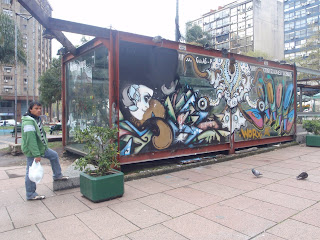

so why am i in uruguay? and why in the world am i only staying briefly before heading back to bariloche?

it just so happened that my mother's vacation time coincided with my visa expiration deadline. and so did our interest in traveling to uruguay. it was a done deal.

i took the overnight overland underwhelming bus ride to buenos aires. with a front row seat in the swaying double decker bus, i enjoyed a fabulous 180 degree view of the argentine countryside. we passed small dusty towns, roaring cities, and crawling sprawls of land with interesting rock formations. names like piedra de aguila, cipolletti, and neuquen... names that had only been blips on my argentina roadmap manefested themselves in living, breathing,
churning civilizations. when the curtain of dusk blanketed the view, i curled up with a movie and then closed my eyes for the next few thousand kilometers.

i woke up just in time for breakfast and our arrival at retiro, buenos aires's bus-train-chaos station. upon arriving to the buquebus terminal, i met my mom and promptly got my cellphone stolen.

it was great to see my mom and we had the hour-long boat ride to catch up and to loosely plan out the following few days. highlights of the ride: new york bagels and japanese rice crackers. lowlight: being enclosed in the buquebus bubble unable to feel the salty seawater ruffle and tangle my hair.


first stop. colonia.

and yes, as the name implies, we were greeted by quaint cobblestone streets, low crumbling colonial stone buildings, greenery and flowers, and quite the array of tourist traps. after leaving our bags at a hotel, we took off exploring.


there was a lighthouse, sailboats, artesans (one of whom, a mendocino, gave me a small green stone as a gift after i made it obvious that i wasn't going to purchase one of his beautiful hand twirled anklets), and hundreds of chivito stands.

chivitos??? in argentina, chivos are goats. thus, chivitos would be little goats. but i found it terribly hard to imagine all of these little restaurants and cafes serving little goats. especially for 100 uruguayan pesos.

i didn't end up having my first chivito until montevideo, the almost-too-tranquilo-to-be-a-capital-city-in-my-opinion-anyway. the trip to montevideo took us through beautiful fertile countysides. kids flying kites. fruit groves. what a beautiful country!


from the bus terminal, tres cruces, we tried our luck with the public bus system. despite a completely illogical interior design, the buses seem like a convenient easy and practical way to get around the city. if the distance is unwalkable.


we walked a lot in montevideo. from our hostel in the historical centro, to the port market, along the pedestrian walkways, up the main avenue, poking through long corridors of cheaply-made expensive clothes, and visiting every single artesan market.


i know i've already mentioned the mate consumption, but it deserves repeating. it is phenomenal. and because, when in uruguay.... this chameleon adopts the local colors. que manera de tomar mate!!

en fin. montevideo meant lots of walking, lots of mate, lots of chivitos (which ended up being a slice of meat packed into an overstuffed sandwich usually accompanied by french fries), lots of quality time with mom!


back in colonia. this time our hotel had a gorgeous patio, perfect for having mate. outside, the school children paraded to celebrate the beginning of spring.


for the return trip to buenos aires, we opted for the colonia express instead of the buquebus. this would be my suggestion for anyone else thinking of making the trip.

from the port, we walked (and walked and walked) to our hostel in monserrat. mom is such a trooper. it was quite a walk.

and it wasn't over. from the hostel, we walked to the microcentro in search of a new phone. up and down the crowded streets. wading through the crowds. after finding a phone, we played tourist for a little while.


after dinner that night, i somehow managed to navegate the subte to palermo to meet wes. after a few games of pool, a few beers, and a few hours of stirring up the dance floor, i returned safely to the hostel only to chat another hour away with some hostelers and cuba libres.

two hours of sleep later. it's breakfast time and i say goodbye to my mom. it was great seeing her and i'm super appreciative of her taking the time to come dowm to visit. thanks for a great time, ma!

made it just in time to the airport to board my flight. chau buenos aires!

i meant to sleep on the flight. but i was worried i'd miss the descent into bariloche. so i stayed awake the whole time... waiting... waiting...

and it was well worth the sleepless wait. the andes appeared as a white line on the horizon. at first i thought they were clouds. as we approached, the perfectly detailed snow-capped mountains came into focus. stunning. absolutely stunning. then the pilot turned slighly left and gave my side of the plane the most amazing view of mount tronador. i could hardly believe my eyes.

upon arriving in the airport i scouted out my options. i would have to wait one hour for public transport to the city. i would have to wait half an hour for the less expensive of the private transports. what to do?

hitchhike?

i had never hitchhiked from the airport, or any airport for that matter. so i gave it a shot.

it was a beautiful sunny flawless day. two cars passed. smile. hopeful thumb. nothing. a hotel-owned van passed, i gave it the thumb not expecting it to stop, normally private companies don't stop. this one did. and was going right passed my house. i couldn't believe my luck.

i got dropped at the door of my house. just in time to get ready for my birthday asado... which i think i'll save for the next blog post.

Sunday, September 26, 2010

Wait for it…Yes, here it comes…. The dreaded …………quarter life crisis.

Sigh.

With my 25th birthday rapidly approaching, I’m allowing some big questions to interrupt my cozy Bariloche bubble. Questions like: What next? Do I stay in Bariloche on more year? Do I leave Patagonia and run away to start from scratch in a completely new country? What are my plans? What are my goals? What am I doing with my life???

Options abound. I could…

1. Stay one more year in Bariloche. Work on getting my residency papers. I already know the city, culture, language. I could get a pretty comfortable job that pays enough to live by. I could get the ski pass for next year. I would still have time to explore, work on projects, grow, learn, love, live…

2. Buy a motorcycle. And go north.

3. Return to the States. It’s been a while since I’ve visited.

4. Hop on a plane to any number of countries… China, Japan, Thailand, Pakistan, Sudan…

5. Retreat into the countryside, build a farm, raise turkeys, grow and cook and preserve and compost my own food.

6. Go to grad school and study sustainable agriculture, ecological architecture, and green living.

7. None or all of the above.

A lot of my current objectives are more long term than previous ones I’ve had and require more time commitment. And those who know me, know that I’m not one for committing, but perhaps it’s time for a change.

I’m at the crossroads and the possibilities are spread out before me. Where do I want life to lead me? Or better stated, where do I want to lead life? What are my realistic goals?

Yes, it is a time for reflection.

And now with my previous restaurant job behind me (yes, I am once again blissfully unemployed as we enter the low season) I have many hours and mate sessions to ponder such questions.

My current rent contract has me in Bariloche until the end of January, so no decision needs to be made in a hasty fashion. But there’s no sense in ignoring my options. Best to let them linger and simmer and caramelize and take form.

So for those of you wondering about immediate plans…

My father has just come and gone from Bariloche. We spent 4 glorious days skiing to our hearts’ content, hiking to great heights, gathering with friends for feasts, and practicing driving stick shift (aka sharing a laugh with innocent observers as I stall three times in a row).

Now in a few days I’m bussing to Buenos Aires to meet my mother. We will pilgrammage to Uruguay, country number 39 on my ever-growing list of countries I’ve visited. When I return to Bariloche I will probably immerse myself in English-teaching odd-jobs. And in my free time (of which I’m sure I will have in abundance) I plan to meditate on my newly acquired slack-line, explore contact improv and other forms of non-verbal communication, practice yoga, cookcookcookexperimentcook, construct a compost, tend to my mini garden, research local indigenous cooking and preserving methods, and start fleshing out my ideas of local sustainable agriculture as a means for social change. And smile, breathe, relax, and enjoy beautiful spring time in Patagonia.

Thursday, September 16, 2010

spring weather fever

The Bariloche ski season is slowly winding down. The sun is out. The days are warmer. The snow is slowly retreating up the mountain. The crowds are fewer. Workers are going through the daily grind with less and less motivation. And the stress levels higher.

Why?

The season is only 3 months long. During those months, the hours are long and days-off are unheard of. By the time we get to September, everyone is tired. Ski instructors have been explaining the same techniques everyday for the past three months. Hotel receptionists have been checking tourists in and out everyday for the past three months. Bus and taxi drivers have been navigating the same route everyday for the past three months. And NewYorkCity-born waitresses have been polishing, serving, and telling the same stories everyday for the past three months.

I’m tired.

I'm done. I'm so very done. I still show up to work everyday, but my heart is very noticeably elsewhere. I go through the motions, but without my usual smile and positivity. It has also come to light that I seem to have a problem dealing with disrespectful and stressed out people. Especially those with supposed authority. Or they seem to have a problem with me.
Whatever it is, there's no need to get into details, but it suffices to say that the energy has turned sour. I’m just looking forward to finishing the season.

So how do I salvage what’s left of my sanity? Well, I live in a ski town… I have the best view of the ski slopes from where I sit polishing cups… and work mere minutes from the ski lifts… I bet you’ve already guessed it.

I had forgotten how much I love skiing.

Flying down the mountain. Weaving through moving targets. Wind snapping through my hair. Controlled recklessness.

It’s amazing.

What does a typical Alisa-day look like? Skiing for 4 hours. Working for 9 hours. Commuting for 2 hours. Waking up and going to bed for 2 hours. Hanging out with friends for 2-5 hours. Sleeping? There’s always time for sleeping in the low season!

Que siga nevando!!

Sunday, August 29, 2010

the little things

I don’t cook a lot these days. In fact, I don’t cook at all. On one hand it’s great: the restaurant provides all my meals and I don’t have to spend money on groceries. I eat well and try dishes I would never think to concoct. On the other hand, cooking is one of my prized ingredients for overall wellness. I thoroughly enjoy cooking. It exercises memory, invokes problem solving, stretches creativity, relieves antsy fingers, and fine-tunes taste buds. It’s one my favorite stress relief strategies. And I miss it dearly.

That’s not to say that I’ve been stressed out lately. Quite the contrary. I’ve been more at peace and relaxed than I think I’ve ever been. There’s something about Bariloche that breathes tranquility. Maybe it’s the snow capped mountains. Maybe it’s the deep blueblueblue lakes. Maybe it’s the green leafy landscapes. Maybe it’s the Argentine attitude. Perhaps it’s all of the above. Whatever it is, I like it.

The winter season peaked last month, so these days the are more laid back. Fewer tourists, fewer tables, more hours to listenthinkobserve. I’ve come to the conclusion that energy in a restaurant is super complex. My position as waitress gives me a great pedestal from which I can easily observe interpersonal relationships of all kinds. From restaurant personnel dynamics to vacationing families. Lots of people coming and going with different expectations and experiences. It’s a fun real-life social psychology experiment.

One thing I’ve learned is that attitude is contagious. A smile can lift up a dreary afternoon just as a harsh word can plummet positive energy.

For example, the nicest moment of the winter season was when a Haitian family waved me over to their table. I thought that they had found some mistake in the bill, but was pleasantly surprised when I found them thanking me. For what, I wanted to know. For everything. Just like that, that simple gesture, those kind words lifted me higher than the highest ski lift on the highest mountain.

Sometimes we are so caught up in the daily grind of stress and routine that we forget to take a moment and appreciate what we have around us. Something so simple as a compliment or a hug can go further than we think. We can connect with those around us: friend, foe or stranger in positive ways just by the domino effect of a kind act.

The worst moment of the winter season was when five gorgeous models promoting Camel cigarettes arrived from Buenos Aires for a promotional event and flaunted their portena attitude at me. The big city mentality of needing everything their way right at this very moment struck me harshly. And keep in mind, I’m from a very big city. I understand that icy cold rushrushrush attitude. And every time I encounter it, I thank my lucky stars that I was able to get out of it.

I remember that I used to be a stressed out adolescent. Worrying about this exam or that social justice protest. I used to care about my image. It used to bug me if I was five minutes late for a meeting. I would worry if this-or-that was going to work out. And it took its toll. Physically and mentally, stress and its adverse effects added to the vicious self-propagating cycle.

But then I started traveling.

And I felt myself changing. I found with every subsequent trip my NewYorkCity bubble slowly starting to pop. I discovered other cultures. I discovered other lifestyles. I discovered the unhealthy stress exists only because we create it.

And that made me inexplicably happy.

So these days I’m super laid back. I make a point to smile at trees, at the crisp breeze, at a really yummy cheese, at the dog with fleas, and at sweet snap peas.

Speaking of peas… My indoor mini experimental garden is adjusting nicely to my new house. There isn’t as much direct sunlight, but I can tell that the plants are much happier. And, yes, plants can be happy. Why they’ve told me so themselves.

I have tomatoes, cabbage, kale, spicy spicy chili peppers, broad beans, parsley, spinach, chard, carrots, arugala, and… peas. And after months of leaves and a few flowers, I was absolutely delighted beyond belief to notice a nice pea pod last night. A PEA POD! Something edible!! This gardening deal actually works. Wowowowowow! Needlesstosay, I can hardly contain my excitement.

More to come. Including photos??

Tuesday, August 17, 2010

trabajando en negro

Every so often the tiniest sliver of information penetrates my Patagonian bubble and reminds me that the world is still out there and, yes, it’s still churning. Sometimes it’s the newest pop song. Sometimes it’s forwarded article from an online news source. Sometimes it’s a brief online chat with a friend. But mostly it’s word-of-mouth hearsay and requires some filtering.

Apparently there was some economic crisis. And then a SWINE flu. Lady Gaga emerged and conquered even my heart. The Gulf of Mexico experienced a catastrophic oil spill. And now a murmuring has reached my ear about… illegal immigrants and undocumented workers.

This may, in fact, be very old news to most of you, but keep in mind that that information has to travel many many thousands of kilometers to Bariloche and then fightfightfight for my attention. And normally I don’t really give it more than a few moment’s thought, but this time it caught my attention and held it.

Why?

Because for the first time in my life I am an illegal immigrant and an undocumented worker.

Yikes.

But honestly it‘s not as bad as it sounds.

What does it mean exactly? Technically I’m a tourist. Well, there’s a tourist visa stamped in my passport anyway. With my tourist visa I am limited to how long I can stay and what I can do here in Argentina. Are laws here strictly enforced? No, it’s Argentina.

I could conceivably get residency and working papers, but the Argentine government has made it confusing, time-consuming, and expensive to do so. I just don’t find it worth my time, money and effort. Especially since I’m not sure how long I’m actually going to stay and…well, there are loop holes in the system. Keeping things in perspective, obtaining even the tourist visa for the US is a hundred thousand times more difficult, time consuming and expensive. Not to mention the residency and working papers. A nightmare.

Yes, every time my 3-month tourist visa expires I perform an emergency border crossing ritual. Yes, I have to run and hide from work-permit inspectors. No, I don’t have the same rights as Argentines. No, I don’t get paid nearly what I deserve. And it’s taken some getting used to, but honestly I can’t complain.

I’ve been in Argentina for almost two years now. Wow. It was never my intention to live here in Bariloche nor stay for as long as I have. But life takes us in unexpected directions. And I’m super okay with it. I’ve learned lessons I’d only dreamed of learning. I’ve lived experiences I’d only dreamed of living. I’m very very very happy. Through the ups and downs, I’ve gained an explicable understanding of life and its workings that probably wouldn’t have been possible if I had stubbornly followed my original plan to the detail. Life is about being flexible, but with a direction. Have a goal, but keep an open mind as in how you get there. I’ve gained a peace, an acceptance, a happiness from all that I’ve been through.

And it hasn’t been all smiles. There have been some valleys in between the hills. But the secret is to learn to navigate those valleys. Machete in hand, carve your own path, learn from mistakes, and look up at the sun and… laugh.

From the seemingly endless apartment search, to the thirteen-hour work days without a single day off in sight, from no residency or work papers, to figuring out that things just work a little differently down here… it’s been a journey.

And this whole experience has given me a whole lotta perspective. I remember, in the States, working alongside undocumented workers. And without a doubt our experiences are very very different. But I give them props. Going to a different country, not speaking the language, not having any contacts, not having a centavo in your pocket, and having to start from absolute zero… it’s tough. Very tough. Tougher than we can imagine.

Picture for a moment, if you will, leaving everything you’ve ever known, saying goodbye to everyone you’re close to, taking with you only the most basic of basic necessities. And moving to another country where you don’t speak the language, you don’t relate with the culture, you don’t find comfort in the local food, you don’t have more than a few coins in your pocket, you need to find an inexpensive place to live and a decent job, and you don’t know a single person. It can be very very scary.

And, yes, they are taking jobs. And, yes, they are agreeing to work for much less than an American citizen. But when desperation knocks on your door, it is nearly impossible to say no. Do you really think that they find joy in their sub-par living conditions? The will to survive drives us all to do things we would ordinarily not even conceive of saying yes to. Like working extreme hours for an obscene paycheck. Like living in unlivable conditions, just because it’s affordable. Like being insulted, humiliated, dehumanized. All just to provide a better life for loved ones. But…placed in the same situation, would you not do the same?

The Argentine labor unions hate people like me. I come in and work for next to nothing and take jobs from qualified Argentines. But I have to pay rent and I have to eat. And I work hard. And I do my job well. I don’t have family here to lean on if I get into financial trouble. So I work whatever I find… to sustain a very modest life… and to plan for my next international adventure.

And of course I didn’t move down to Argentina for the economic possibilities… because that would be silly. I came here because the idea was planted on one day in rainy Seattle and I took it seriously. I stayed because, well, Argentina has hooked me. And if I am to see the country from the eyes of the locals, the sacrifices I make are nothing compared to the lessons I learn. And I have learned some damn important lessons.

In closing, I know that one day I will return to the grand US of A if only to visit before my next adventure. I know that everything I live, every experience I have, every person’s story I’ve heard, is now a part of me. It has molded me and become a part of me. We are forever growing as we accumulate life experiences. It is our choice what experiences we encounter and I chose all of the above.

I am a more well-rounded, mature, happy individual from all this traveling I do. The things I’ve seen, tasted, smelled, felt, heard, learnt and especially the people I’ve met are indescribably indispensable. And I'll continue to put myself in unimaginable situations, if only to push the boundaries of what is possible.That, to me, is life.

And why let life and all its glorious adventures pass us by? Let's live!

Haha. I’ve been called ‘crazy’ by countless people in many languages across many continents… and I just smile. Normal must be all sorts of boring. I want nothing to do with it.

Saturday, August 7, 2010

laburando a full

Haven’t been in much of a writing mood lately. Many noteworthy events have come and gone; many anecdotes have been shared and pondered upon; many songs have been grooved to; many dishes have been ordered and thoroughly enjoyed; many tourists have come and gone from Cerro Catedral; and many many cups and glasses and silverware and plates have been hand polished at a particular restaurant where our protagonist now sits on a stool behind a hand carved cypress bar sipping a rather strong coffee and staring out at the snow delicately dusting the mountain looming over the indecisively smalltownbigcity Bariloche.

I’m tired. Mentally and physically exhausted. The kind of black hole exhaustion that destroys energy and ganas. I haven’t felt like doing very much of anything lately. Which is not like me.

But when would I have time to do anything anyway? With 13 hour on-my-feet-constantly-smiling-and-being-pleasant work days, seven days a week, I’m left with a few hours for sleeping, a few hours for commuting, and a few for waking up and falling asleep. Rinse repeat. It’s tough.

So why am I subjecting myself to such torture?

Because I secretly love it.

Honestly I do. I love being busy. I love working working working. I love the manual labor. I love the experience of waiting tables in another country. I love meeting people and watching their faces when they realize I’m not Argentine, but rather a New York City girl with an international heart. I love hearing people’s stories and sharing my own. Needlesstosay, I’m not doing this for the money. Because waiting tables in a third world country does not fill my bank account. But it’s not money I’m after. So what is it?

Hmmm… to better explain this, I’ll digress into the reason why I travel in the first place.

I’ve been tremendously fortunate to have had a generous helping of international experience before I could even utter my first song lyric or stew recipe. Zoom in on my traveling debut as a wide-eyed infant cooing in the arms of Italian strangers. As the ages accumulated, so did my worldly adventures. Toddler running through the streets of Rome and squealing in the sands of Costa Rican beaches. Child exploring temples in rural Japan and cringing at Australian vegemite. Adolescent eating the best ice cream ever from a Kyrgyz street vendor and being awkwardly hit on in an upstairs carpet factory overlooking a sprawling Moroccan market. But yes, even I was an extremely angsty teenager. It culminated on an Ecuadorian boat to the Galapagos Islands where I made one of the most important decisions of my life.

It dawned on me that I didn’t want to travel with my parents anymore. Nothing against my parents; they are lovely people. But I was an adolescent and, on top of that, I had realized that my parents and I had very different traveling objectives. I no longer wanted to spend a week-long vacation taking photos, staying at hotels, and touring tourist sites. I wanted to learn the local language, I wanted to eat at the best hole-in-the-wall local restaurant, I wanted learn the culture, I wanted to see what couldn’t be seen in only a few days, I wanted to throw off my tourist cape and become a local.

The next year I applied to, and got accepted for, an opportunity to spend a school year in Zaragoza, Spain. It was my first international experience without my parents. It was life-changing. Lots of great times and, of course, lots of lessons learned.

Since then I’ve been constantly reinventing myself as a traveler. Each consequent trip had something to teach me. And every trip was obliged to be better than the previous one. My colorful five week Mexico to Panama whirlwind with Harry. My various Middle Eastern wanderings. And now this Panama to Argentina journey has been the most surprising. Everything I’ve seen, experienced, eaten, heard, and learned on these travels could fill a book and is not necessarily what this particular blog post is about. But I digress, I guess I travel to be a chameleon. To absorb the local colors, flavors, smells, sights, histories, personalities, and subtleties. I let them wash over me, I learn from them, and then selectively adopt them. And grow.

My goal is to be a local wherever I go. Learn the slang, learn the customs, learn the music, learn the recipes. Walk the walk, talk the talk. It’s so fun. But more than that, it opens your mind and makes you a more mature, well-rounded, deeper individual.

So, why am I working a million and a half hours at a physically demanding job that pays me less than minimum wage? Because I’m a local. Because that’s what most people here do, at least once. Because I can’t pretend like I’ve had the true Bariloche experience without working the winter season at the Cerro. Because I love food and working in a food environment. Because I love chatting with people from all over the world. Because I love the people I work with. Because my “office” view is a gigantic snowy mountain. And because I’m learning a lot.

I’m learning more than just new recipes and names of wineries. I’m learning so much about balancing being productive and being laid back; the delicate fine line of efficiency and not being stressed out. I’m learning about work-place dynamics. I’m learning about healthy (and unhealthy) ways to deal with stress. I’m learning by observing and interacting. I’m learning more about people. I’m learning more about what kind of person I want to be.

We’re a month and a half into the season. And it’s been a great experience. But I’m tired. I’m burnt out. I find myself with zero energy, zero interest, zero desire to do anything at all. And then I chant my favorite mantra of the season: three months, three months, three months. This is all only for three months, and then we hit low season and jobs are scarce and the whole city of Bariloche takes a deep breath.

In the meantime, I’ll just sit here meditating on my coffee cup, acquiring a healthy sitting posture, and my daily self-imposed goals.

I had wanted this post to be about illegal immigrant workers… but it has turned out quite different. Well, it is what it is, and there will always be another blog post. Hasta la proxima!

Tuesday, July 6, 2010

transitions

Perhaps you’re wondering why I haven’t written anything recently. Perhaps you haven’t even notice my virtual absence. Perhaps you, too, find yourself in a moment of transition.

Long before the technology existed that allowed us to free ourselves from the confining parameters of nature, seasons, weather, and moon cycles... people depended greatly on the natural breathing of the Earth. Long before the office-home-office-home-office routine was established, seasons had tangible consequences and deadlines were set and enforced by the rise and fall of the sun. Long before igadgets, people could tell you what phase the moon was in at any moment (without consulting google). In an age where we try our darndest to ignore, conquer and isolate ourselves from nature, I feel an urge to turn right around and embrace it.

I hear so many complaints about nature. Either it’s too hot, or too cold, or too cloudy, or too sunny, or ohmanit’srainingagain. We build umbrellas, tunnels, cars, roofs, fortresses. We run with our heads down, cursing whatever season we’re in, because water will ruin our hairstyle or our socks will get wet or or or... nothing at all; we just can’t get enough of complaining.

But we have a choice in life. We can complain, furrow our brows, tense up our shoulders, cry, scream, punch a pillow... or we can accept it for what it is and enjoy it. How long has it been since you bundled up in good water-proof boots and a poncho and walked in the rain? Listen to the drops tipity-tap on your eyelashes. Squish your way through mud and splash in puddles. Watch as your breath becomes transparent and wonder: how the heck does that happen? Sure you’ll get wet, but it’s water, and it dries! And instead of scowling and moaning about the limitations of weather, love it and live it. Weather is going to act how it wants, we have to stop trying to control it with negative emotions. And who knows, maybe some who cares about you will have a steaming mug of hot chocolate waiting for you upon your return.

I have never been at the mercy of weather like I have in Patagonia. Wind so strong that it nearly picks you up and carries you from the top of Cerro Otto or fills your flapping tent with sand in Jaramillo. Rain that floods Barrio Las Victorias and leaves cars stranded in road-side ditches. Snow that blocks mountainous border crossings and makes-or-breaks the annual economy of tourist-dependent Bariloche.

We are entering in Winter. Everyone’s excited.

Winter is Bariloche’s big season. Home to famous Cerro Catedral, the city revolves around ski-tourism. Everyone sits, fingers permanently crossed, and waits for the snow to fall. Ojalá que haya nieve este año! When there’s snow, the tourists come. When the tourists come, the jobs appear. When the jobs appear, money circulates and there’s less worry about making ends meet this month.

This is the first place I’ve lived that works this way. It’s a completely different rhythm. Most people don’t have a steady job throughout the year. Most people work the seasons. The big ones being: winter and summer. It was hard to wrap my head around it at first because summer and winter are when most other people in the world are vacationing. Honey, let’s go to Cancun this year. Or Italy, or Thailand, or... Summer and Winter were relaxing seasons. Take a plane somewhere and be on vacation.

But here in Bariloche that’s when people work. And work hard! Someone has to receive you at your hotel reception desk. Someone clears your plates at the end of a restaurant meal. Someone drives your taxi. Long long long hours. And not a single day off. For three months.

I’ve been in Bariloche for over a year and a half now. And I think I’ve experienced two different Bariloches during my time here. The first year I was the gringa living abroad. I was getting used to the Argentine accent and slang. I was living in a relatively comfortable house. Eating very very well. Teaching English. Living the ex-pat life of comfort in an exotic place.

This year is different. This year I’m living in a half-finished house at the edge of town with six Argentine guys. Machismo so thick you could stick a peg in it and hang up your gaucho hat. I make just enough to pay rent and put food on the plate. At the end of the month I can count the number of pesos I have on one hand. I’m learning about local agriculture and making my own food. I try my best to eat with the seasons and make everything fresh and from scratch. And there’s been one new development... I have been offered a winter-dependent job.

After a few weeks of walking around downtown and the luxurious ski resort, handing out resumes, and handling questions about work papers, I have accepted a job as waitress at an upscale restaurant at the ski resort. I am super psyched. It'll be a great opportunity to experience the real Bariloche from the eyes of a local. Along with the hourlong commute, the hours are long, but the pay is good. The season hasn't officially started yet, so restaurant movement is slow. But the snow is falling and everyone calculates this weekend as the green light for tourism.

Update to come!

Fingers crossed for snow!

Wednesday, June 9, 2010

basura: the ugly bariloche

It is roughly 5km from my house to the downtown area. I almost always walk, there and back. It’s a great time to entertain my inner thoughts, plan, and dream. And the other day I discovered a new route! This route takes me through fields of waist-high bushes of the prickly variety and displays a postcard view of the Andes and the sparkling blue Nahuel Huapi lake. The day was a beautiful partly cloudy and the air had a crisp autumn feeling. I was in a great mood, but there was one problem.

I would like to take this opportunity to talk about... garbage, trash, rubbish, waste.

I think I live in one of the most stunningly beautiful inhabitable places on Earth. We have mountains, forests, and the-bluest-of-blue lakes. We have condors circling overhead, we have edible and non-edible flora, we have picturesque viewpoints. But we also have a garbage problem.

People come to Bariloche for two reasons: 1. to escape civilization and frolic in nature. 2. to make money from people who want to escape civilization and frolic in nature.

What this means is that Bariloche, which was once a quaint small city in the foothills of the gorgeous Andes, has doubled in population in the past 5-10 years. Without official zoning laws, houses-hotels-restaurants-resorts-bars are being constructed daily. And the infrastructure of the city is nowhere near able to deal with the seasonal influx of tourists, retirees, and jobseekers.

With all those people, comes waste. Garbage is everywhere: from the downtown streets, to the lakeshore beaches, to the areas surrounding the city. Plastic supermarket bags, soda bottles, candy wrappers, and construction materials are the most common and the most identifiable. The dump outside the city is visibly overflowing. And the ever-present Patagonian wind picks up what it can and carries it to the low-income neighborhoods and off into the countryside. The very countryside that I walked through yesterday. Garbage. Everywhere. I was appalled.

So I urge, more like plead, those who live in this beautiful environment to re-evaluate certain consumption and garbaging activities. As a first step, I’d like you to look through... your trash.

That’s right. I want you to open up your garbage bag and observe its contents. If you say, eeeew, that’s the first problem. What kind of things are you throwing into the environment? Remember that your waste doesn’t simply disappear when you toss it in the dumpster. It actually goes somewhere.

Once over the initial disgust of opening and looking into your garbage, get down and dirty. What do you find?

Remember organic waste can be composted. Compost is the integration of organic material into soil. Instead of stinking up our dumps with putrid fermentation, veggie scraps and fruit cores can return to the earth without much hassle. Composts can be easily constructed or bought and, once you get into the habit of separating your trash, it can become part of your daily routine. Composts can be any size and can even be an indoor activity. Both my parents now compost in their New York City apartments! I’m so proud! You will not only reducing the amount of waste you create, but you’ll be creating some soil for your garden :-)

What else do you find in your garbage? Bottles? Containers of all kinds? Plastic and glass take a very long time to disintegrate. Ask yourself the following questions:

Can these be recycled? In the US recycling plants exist! Find out what is recycled in your area.

Can I reuse these? Will they serve some other household purpose? Plant pots?! Art projects?!

Can I consume things that don't come in plastic/glass/styrofoam? Can I drink fresh fruit juice instead of sodas? Do I need everything to come in layers and layers of packing material? Are there products with biodegradable packaging? Can I buy locally and reuse containers?

Can I bring my own containers to the store? Egg containers and bulk food stores! Local producers!

Can I buy in larger quantities so I don’t buy too many individual packages? Do I need individually wrapped candies? Do I need single serving packets? Can I buy in bulk and use moderately over time?

Can I make any of this homemade?! Reduce packaging, reduce processing, increase fun and increase tastiness!

When we consciously evaluate our consumption practices we can usually find ways to make a few minor changes that have super productive and positive effects. REDUCE REUSE AND RECYCLE is such an overused phrase that hardly anyone actually stops and thinks that, yea, this could be a good idea. But... think about it... just thinking about how we discard garbage is a step in the right direction. If we can reduce the amount of trash we throw out, that’s another step. We can convince others that perhaps it may be a worthwhile activity to take care of our environment, wow, perhaps we can enjoy our beautiful world a little bit longer.

Thursday, June 3, 2010

Legumes, Grains, Veggies. The possibilities are endless.

Even though Argentina is famous world-wide for beef, I don’t eat a lot of meat. Sure, I enjoy an occasional bife de chorizo or 6-hour asado feast loaded with chorizos, morcillas, colita de cuadril, tapa de asado, nalga, vacío... Mmmmm... But the key word is occasional.

Why? Why in the world wouldn’t I take advantage of all this lovely lovely red meat?

Well, for a number of reasons.

1. Financial reasons. Meat is expensive... and the cost is rising.

2. Health reasons. Sure, meat is loaded with proteins, but it’s not necessarily good to be eaten in large quantities or super frequently. As a species, we have evolved to be omnivores (eat a little bit of everything) and back in the past before meat was readily available in carnicerías and supermarkets, early humans had to hunt. Meat was a luxury and often hard to come by. We are not made to eat red meat all the time. Eating meat in excess can lead to high cholesterol, high blood pressure, obesity... and overly aggressive behavior. ESPECIALLY beef raised in the United States. Don’t get me started. It’s absolutely disgusting and void of flavor. If you want a real steak, come to Argentina. I’m just saying.

3. Environmental reasons. Beef, pork, and poultry industries are a responsible for overwhelming amounts of carbon dioxide and methane released into the atmosphere. Feed production and harvest, transportation of said feed, raising of animals, butchering of animals, transportation of meat, refrigeration of meat, and processing of meat (when applicable) takes an astonishing quantity of fossil fuel and creates an even more astonishing quantity of waste.

4. Culinary reasons. Since I have discovered the joy of legumes, I have more creative freedom and experimenting options in the kitchen. Just thinking about it makes me giddy! Let’s get started!

Now, some hardcore carnivores will argue that beans and grains will not supply us with the sufficient amount and appropriate types of proteins. I counter argue that, when used correctly, we can do just fine eating a plant-based diet. I will also mention the importance of listening to your body. If you crave meat, eat it. If you crave fresh veggies, eat them. If you crave a cone piled high with eight flavors of ice cream, go for it. Your body does a great job of asking for food it’s lacking.

In general, legumes combined with a grain will provide us with what is called a complete protein. So I follow that guideline when I prepare my meals. Chose one legume. Chose one grain. Chose super colorful veggies to complement.

Legumes: Lentils, garbanzos, black beans, kidney beans, lima beans, broad beans, regina beans, black eyed peas... etc. Check your local health food bulk store. I usually buy a kilo at a time and that lasts me quite a while. Take your reusable shopping bag or backpack.

Grains: Rice (I always buy brown rice... it’s more filling and more nutritious, and less processed than white rice), wheat, barley, oats, corn, quinoa, millet... etc. Wheat comes in many forms, but more about that later.

Veggies: The more colorful, the better. I have been using a lot of red cabbage, spinach, beet (and beet greens), broccoli, tomatoes (but only when they are in season), kale, arugula, squashes (steamed... ooOOooo I love my steamer! but more about that later), or whatever is fresh and catches my eye in the veggie shop.

Legumes usually need to be washed. If you rinse them once, twice, perhaps three times that should do the trick. I always soak them to reduce cooking time. I like this step because it requires me to think ahead about my meals. I usually have two or three kinds of beans soaking at any time. Make sure you change the water twice a day to prevent fermentation. Discard water... preferably into your compost.

Legumes are then boiled. I was told to discard the water that you boil them in because the consumption of that water is what produces gas and gives beans the fame of fart production (Beans bean, the magical fruit...). Cooking time depends on the kind of legume and how long it was allowed to soak. Don’t be timid, take a taste as it cooks!

Grains, also, should be rinsed off. In fact as a rule, anything you buy in bulk, should be rinsed off.

A quick aside about wheat. Always buy whole wheat flour. I know it’s a little bit more expensive, but honestly it’s worth it. White flour is almost void of nutritious value. All the good stuff is stripped off in the processing. Even if you add wheat bran (salvado de trigo), it won’t compensate. I very rarely use white flour.

I also discovered cracked wheat the other week. Thinly ground cracked wheat doesn’t need to be cooked! Just leave it in hot water until it becomes soft and... it’s ready! Thickly ground cracked wheat can be boiled until soft.

Here are two great ways to combine legumes and grains: patties and hearty salads.

Patties:
Chose one legume and one grain. I once did this with millet and regina beans. Another time with polenta (corn flour) and lentils. Tonight I think I’ll do garbanzos and rice... Mmmm... Once cooked, mash the ingredients together into a paste. I add some sauteed onions, garlic, and spices (curry is super yummy). Once I added steamed squash. Another time I added spinach or chard. Or all of the above! Then I added some whole wheat flour. I found that if you stick it in the fridge, it’s easier to handle (less sticky). You can also add egg and bread crumbs to help with the cohesion. Then you form the paste into little patties and brown them on a frying pan or in the oven. I sprinkle sesame seeds on them... just because I can. Then eat with a salad, in a sandwich, or with oven roasted veggies with rosemary.

Salad:
Chose one legume and one grain. Cook until ready to eat. Discard water. Let cool. Chop some veggies. Cabbage, beets (raw, finely chopped or grated), carrots, spinach, fresh garlic (spicy, delicious, but stinky!), cucumber... really ANYTHING! A sprinkle of salt, freshly ground black pepper, basil flakes (or fresh basil... if available), oil, lemon...etc. Some people like mayonnaise. Mix everything together. Enjoy! I’ve done this a lot with rice and lentils. But it works with any combination!


I am a strong advocate of steaming veggies. Steaming is great. It takes about the same time as boiling and retains much more flavor and nutrients. Veggies I’ve steamed in the past month since splurging on a new steamer: potatoes, sweet potatoes, turnips, squashes of all shapes sizes and colors, broccoli, spinach, corn...

And then there are soy beans. I personally love soy beans. They are super super super inexpensive and more than double in size when you soak them. They contain a complete protein and do not need to be combined with a grain. But it’s ok if you do.

Soy beans, once cooked, are super versatile. I love eating them plain as a snack food or popping them on top of salads. They are great in stir fry and soups. You can also make soy milk and tofu. I haven’t yet attempted those, but I will report back once I do. Feel free to write in with success stories and suggestions!

En fin, legumes are fun and delicious. And super inexpensive compared to meat(financially and environmentally). Experiment experiment experiment! Take out, dust off, and exercise your creativity. And always remember... everything in moderation. It’s all about variety!

Coming up...

Successes and... ahem... mistakes are all part of culinary exploration and innovation.

Sunday, May 30, 2010

every so often...


I don’t eat many sweets these days, but every once in a while, even I have to indulge my sweet tooth. And I have a feeling that some of you may be heavily into the consumption of sugar, corn syrup, saccharin, honey or any other lip-smacking delicacies.


At home I don’t have sugar. I just don’t need it. Instead I dip my spoon into local honey and I use it for breads, in my morning oatmeal, stirred into coffee or tea, to make a hearty crunchy granola... or just plain, right off the spoon and into my mouth! True, it’s a bit more expensive than granulated, off-the-supermarket-shelf, white, mass-produced sugar. But since I don’t use too much of it, I’d prefer to use my hard-earned Argentine pesos to support my local apiculturists, combat seasonal allergies, and enjoy the rich taste of golden honey. Mmmm...


Fruits are also great for entertaining the sugar sensors of our taste buds. I find that locally grown fruits not only help the local economy, but taste heaps better than fruits picked prematurely and shipped many many miles to large and impersonal supermarkets. Verdulerías and fruterías (veggie and fruit shops) are my favorite places to be. The verduleros are usually friendly and super helpful folks and I love to be surrounded by the colors and smells of fresh fruits and veggies. So many options. And so inexpensive.


But back to the point. Even I give in every once in a while and enjoy a good sugar binge. Such is the case as a few days ago. Presenting... homemade flan and ice cream!


Flan is a popular dessert of high sugar content. It is very yummy. Here’s the recipe that we used. And there are many variations so feel free to experiment!


After preheating the oven to 175 degrees C (350 degrees F), we melted 1/2 cup of sugar to a golden brown. We poured above melted sugar into our casserole pan, tilting it so that we covered the bottom of the pan. While we heated 2 cups of milk to a boil over medium heat, we beat 2 full eggs and 2 egg yokes in a separate container. The leftover egg whites made a beautiful omelete the next day! Stir hot milk, a little at a time, into the beaten eggs. Add 3/8 cup sugar. We also added a splash of vanilla. Pour egg-milk-sugar-vanilla mixture into the pan. We placed that casserole pan in a larger pan and added hot water to the larger pan. Like a baña María. And... into the oven until firm, but jiggly. Let cool (or not!) and enjoy with (optional) homemade cookies-and-cream ice cream. Recipe to follow.


Homemade ice cream. Milk, cream, vanilla, sugar and Oreos (yes, we splurged on REAL, imported-from-the-USA Oreos). I haven’t a clue about the proportions because Randy was in charge of this one, but I don’t think proportions really matter. Experiment! Pour into ice cream maker and churn. Steph claims that if you don’t have an ice cream maker, you can use two tin cans with snug lids, ice and salt. I’m skeptical. I will report when I have conclusive evidence.


Coming up soon...


Having fun with inexpensive alternative protein sources: my obsession with legumes!