Tuesday, July 6, 2010

transitions

Perhaps you’re wondering why I haven’t written anything recently. Perhaps you haven’t even notice my virtual absence. Perhaps you, too, find yourself in a moment of transition.

Long before the technology existed that allowed us to free ourselves from the confining parameters of nature, seasons, weather, and moon cycles... people depended greatly on the natural breathing of the Earth. Long before the office-home-office-home-office routine was established, seasons had tangible consequences and deadlines were set and enforced by the rise and fall of the sun. Long before igadgets, people could tell you what phase the moon was in at any moment (without consulting google). In an age where we try our darndest to ignore, conquer and isolate ourselves from nature, I feel an urge to turn right around and embrace it.

I hear so many complaints about nature. Either it’s too hot, or too cold, or too cloudy, or too sunny, or ohmanit’srainingagain. We build umbrellas, tunnels, cars, roofs, fortresses. We run with our heads down, cursing whatever season we’re in, because water will ruin our hairstyle or our socks will get wet or or or... nothing at all; we just can’t get enough of complaining.

But we have a choice in life. We can complain, furrow our brows, tense up our shoulders, cry, scream, punch a pillow... or we can accept it for what it is and enjoy it. How long has it been since you bundled up in good water-proof boots and a poncho and walked in the rain? Listen to the drops tipity-tap on your eyelashes. Squish your way through mud and splash in puddles. Watch as your breath becomes transparent and wonder: how the heck does that happen? Sure you’ll get wet, but it’s water, and it dries! And instead of scowling and moaning about the limitations of weather, love it and live it. Weather is going to act how it wants, we have to stop trying to control it with negative emotions. And who knows, maybe some who cares about you will have a steaming mug of hot chocolate waiting for you upon your return.

I have never been at the mercy of weather like I have in Patagonia. Wind so strong that it nearly picks you up and carries you from the top of Cerro Otto or fills your flapping tent with sand in Jaramillo. Rain that floods Barrio Las Victorias and leaves cars stranded in road-side ditches. Snow that blocks mountainous border crossings and makes-or-breaks the annual economy of tourist-dependent Bariloche.

We are entering in Winter. Everyone’s excited.

Winter is Bariloche’s big season. Home to famous Cerro Catedral, the city revolves around ski-tourism. Everyone sits, fingers permanently crossed, and waits for the snow to fall. Ojalá que haya nieve este año! When there’s snow, the tourists come. When the tourists come, the jobs appear. When the jobs appear, money circulates and there’s less worry about making ends meet this month.

This is the first place I’ve lived that works this way. It’s a completely different rhythm. Most people don’t have a steady job throughout the year. Most people work the seasons. The big ones being: winter and summer. It was hard to wrap my head around it at first because summer and winter are when most other people in the world are vacationing. Honey, let’s go to Cancun this year. Or Italy, or Thailand, or... Summer and Winter were relaxing seasons. Take a plane somewhere and be on vacation.

But here in Bariloche that’s when people work. And work hard! Someone has to receive you at your hotel reception desk. Someone clears your plates at the end of a restaurant meal. Someone drives your taxi. Long long long hours. And not a single day off. For three months.

I’ve been in Bariloche for over a year and a half now. And I think I’ve experienced two different Bariloches during my time here. The first year I was the gringa living abroad. I was getting used to the Argentine accent and slang. I was living in a relatively comfortable house. Eating very very well. Teaching English. Living the ex-pat life of comfort in an exotic place.

This year is different. This year I’m living in a half-finished house at the edge of town with six Argentine guys. Machismo so thick you could stick a peg in it and hang up your gaucho hat. I make just enough to pay rent and put food on the plate. At the end of the month I can count the number of pesos I have on one hand. I’m learning about local agriculture and making my own food. I try my best to eat with the seasons and make everything fresh and from scratch. And there’s been one new development... I have been offered a winter-dependent job.

After a few weeks of walking around downtown and the luxurious ski resort, handing out resumes, and handling questions about work papers, I have accepted a job as waitress at an upscale restaurant at the ski resort. I am super psyched. It'll be a great opportunity to experience the real Bariloche from the eyes of a local. Along with the hourlong commute, the hours are long, but the pay is good. The season hasn't officially started yet, so restaurant movement is slow. But the snow is falling and everyone calculates this weekend as the green light for tourism.

Update to come!

Fingers crossed for snow!

Wednesday, June 9, 2010

basura: the ugly bariloche

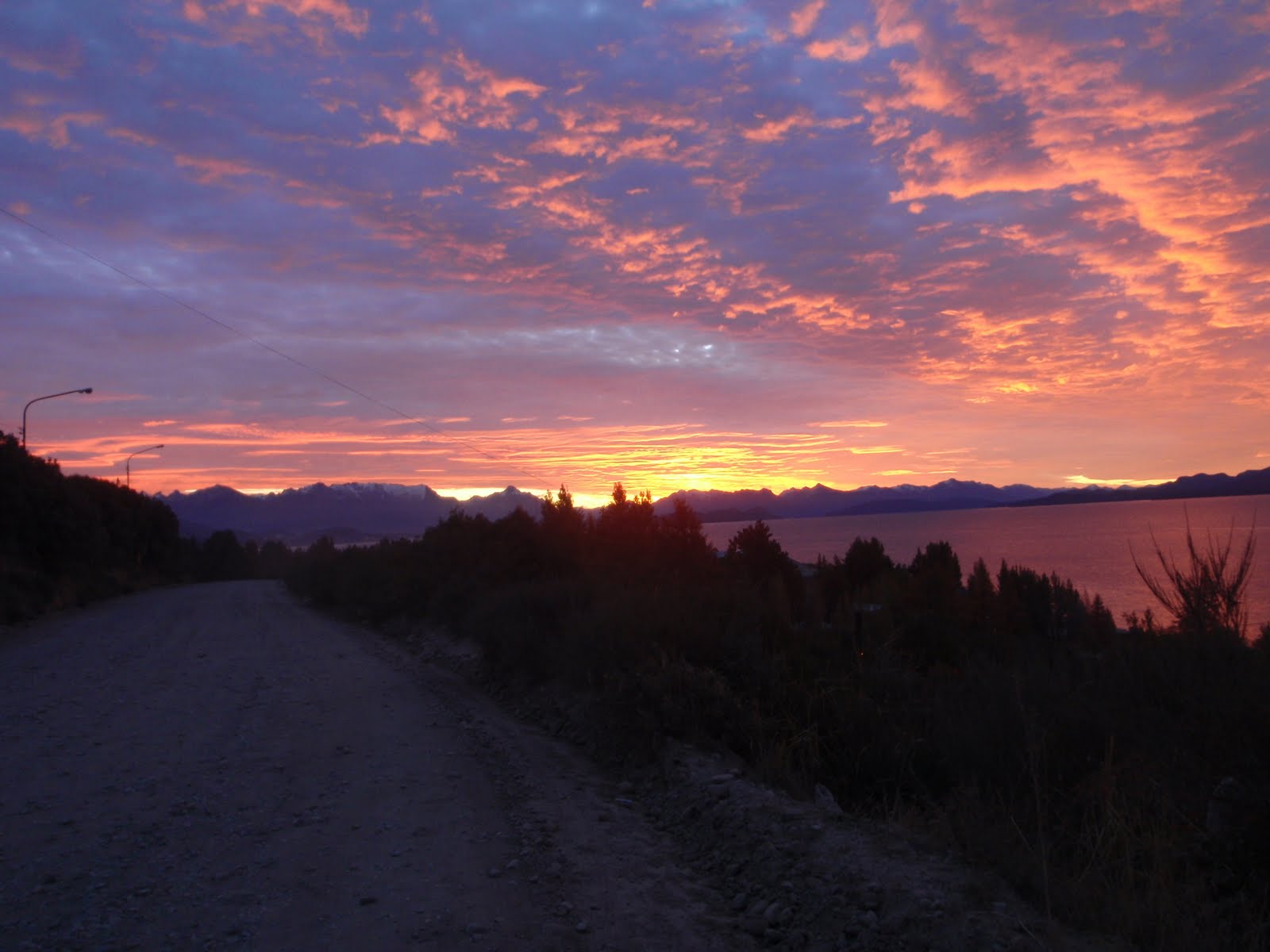
It is roughly 5km from my house to the downtown area. I almost always walk, there and back. It’s a great time to entertain my inner thoughts, plan, and dream. And the other day I discovered a new route! This route takes me through fields of waist-high bushes of the prickly variety and displays a postcard view of the Andes and the sparkling blue Nahuel Huapi lake. The day was a beautiful partly cloudy and the air had a crisp autumn feeling. I was in a great mood, but there was one problem.

I would like to take this opportunity to talk about... garbage, trash, rubbish, waste.

I think I live in one of the most stunningly beautiful inhabitable places on Earth. We have mountains, forests, and the-bluest-of-blue lakes. We have condors circling overhead, we have edible and non-edible flora, we have picturesque viewpoints. But we also have a garbage problem.

People come to Bariloche for two reasons: 1. to escape civilization and frolic in nature. 2. to make money from people who want to escape civilization and frolic in nature.

What this means is that Bariloche, which was once a quaint small city in the foothills of the gorgeous Andes, has doubled in population in the past 5-10 years. Without official zoning laws, houses-hotels-restaurants-resorts-bars are being constructed daily. And the infrastructure of the city is nowhere near able to deal with the seasonal influx of tourists, retirees, and jobseekers.

With all those people, comes waste. Garbage is everywhere: from the downtown streets, to the lakeshore beaches, to the areas surrounding the city. Plastic supermarket bags, soda bottles, candy wrappers, and construction materials are the most common and the most identifiable. The dump outside the city is visibly overflowing. And the ever-present Patagonian wind picks up what it can and carries it to the low-income neighborhoods and off into the countryside. The very countryside that I walked through yesterday. Garbage. Everywhere. I was appalled.

So I urge, more like plead, those who live in this beautiful environment to re-evaluate certain consumption and garbaging activities. As a first step, I’d like you to look through... your trash.

That’s right. I want you to open up your garbage bag and observe its contents. If you say, eeeew, that’s the first problem. What kind of things are you throwing into the environment? Remember that your waste doesn’t simply disappear when you toss it in the dumpster. It actually goes somewhere.

Once over the initial disgust of opening and looking into your garbage, get down and dirty. What do you find?

Remember organic waste can be composted. Compost is the integration of organic material into soil. Instead of stinking up our dumps with putrid fermentation, veggie scraps and fruit cores can return to the earth without much hassle. Composts can be easily constructed or bought and, once you get into the habit of separating your trash, it can become part of your daily routine. Composts can be any size and can even be an indoor activity. Both my parents now compost in their New York City apartments! I’m so proud! You will not only reducing the amount of waste you create, but you’ll be creating some soil for your garden :-)

What else do you find in your garbage? Bottles? Containers of all kinds? Plastic and glass take a very long time to disintegrate. Ask yourself the following questions:

Can these be recycled? In the US recycling plants exist! Find out what is recycled in your area.

Can I reuse these? Will they serve some other household purpose? Plant pots?! Art projects?!

Can I consume things that don't come in plastic/glass/styrofoam? Can I drink fresh fruit juice instead of sodas? Do I need everything to come in layers and layers of packing material? Are there products with biodegradable packaging? Can I buy locally and reuse containers?

Can I bring my own containers to the store? Egg containers and bulk food stores! Local producers!

Can I buy in larger quantities so I don’t buy too many individual packages? Do I need individually wrapped candies? Do I need single serving packets? Can I buy in bulk and use moderately over time?

Can I make any of this homemade?! Reduce packaging, reduce processing, increase fun and increase tastiness!

When we consciously evaluate our consumption practices we can usually find ways to make a few minor changes that have super productive and positive effects. REDUCE REUSE AND RECYCLE is such an overused phrase that hardly anyone actually stops and thinks that, yea, this could be a good idea. But... think about it... just thinking about how we discard garbage is a step in the right direction. If we can reduce the amount of trash we throw out, that’s another step. We can convince others that perhaps it may be a worthwhile activity to take care of our environment, wow, perhaps we can enjoy our beautiful world a little bit longer.

Thursday, June 3, 2010

Legumes, Grains, Veggies. The possibilities are endless.

Even though Argentina is famous world-wide for beef, I don’t eat a lot of meat. Sure, I enjoy an occasional bife de chorizo or 6-hour asado feast loaded with chorizos, morcillas, colita de cuadril, tapa de asado, nalga, vacío... Mmmmm... But the key word is occasional.

Why? Why in the world wouldn’t I take advantage of all this lovely lovely red meat?

Well, for a number of reasons.

1. Financial reasons. Meat is expensive... and the cost is rising.

2. Health reasons. Sure, meat is loaded with proteins, but it’s not necessarily good to be eaten in large quantities or super frequently. As a species, we have evolved to be omnivores (eat a little bit of everything) and back in the past before meat was readily available in carnicerías and supermarkets, early humans had to hunt. Meat was a luxury and often hard to come by. We are not made to eat red meat all the time. Eating meat in excess can lead to high cholesterol, high blood pressure, obesity... and overly aggressive behavior. ESPECIALLY beef raised in the United States. Don’t get me started. It’s absolutely disgusting and void of flavor. If you want a real steak, come to Argentina. I’m just saying.

3. Environmental reasons. Beef, pork, and poultry industries are a responsible for overwhelming amounts of carbon dioxide and methane released into the atmosphere. Feed production and harvest, transportation of said feed, raising of animals, butchering of animals, transportation of meat, refrigeration of meat, and processing of meat (when applicable) takes an astonishing quantity of fossil fuel and creates an even more astonishing quantity of waste.

4. Culinary reasons. Since I have discovered the joy of legumes, I have more creative freedom and experimenting options in the kitchen. Just thinking about it makes me giddy! Let’s get started!

Now, some hardcore carnivores will argue that beans and grains will not supply us with the sufficient amount and appropriate types of proteins. I counter argue that, when used correctly, we can do just fine eating a plant-based diet. I will also mention the importance of listening to your body. If you crave meat, eat it. If you crave fresh veggies, eat them. If you crave a cone piled high with eight flavors of ice cream, go for it. Your body does a great job of asking for food it’s lacking.

In general, legumes combined with a grain will provide us with what is called a complete protein. So I follow that guideline when I prepare my meals. Chose one legume. Chose one grain. Chose super colorful veggies to complement.

Legumes: Lentils, garbanzos, black beans, kidney beans, lima beans, broad beans, regina beans, black eyed peas... etc. Check your local health food bulk store. I usually buy a kilo at a time and that lasts me quite a while. Take your reusable shopping bag or backpack.

Grains: Rice (I always buy brown rice... it’s more filling and more nutritious, and less processed than white rice), wheat, barley, oats, corn, quinoa, millet... etc. Wheat comes in many forms, but more about that later.

Veggies: The more colorful, the better. I have been using a lot of red cabbage, spinach, beet (and beet greens), broccoli, tomatoes (but only when they are in season), kale, arugula, squashes (steamed... ooOOooo I love my steamer! but more about that later), or whatever is fresh and catches my eye in the veggie shop.

Legumes usually need to be washed. If you rinse them once, twice, perhaps three times that should do the trick. I always soak them to reduce cooking time. I like this step because it requires me to think ahead about my meals. I usually have two or three kinds of beans soaking at any time. Make sure you change the water twice a day to prevent fermentation. Discard water... preferably into your compost.

Legumes are then boiled. I was told to discard the water that you boil them in because the consumption of that water is what produces gas and gives beans the fame of fart production (Beans bean, the magical fruit...). Cooking time depends on the kind of legume and how long it was allowed to soak. Don’t be timid, take a taste as it cooks!

Grains, also, should be rinsed off. In fact as a rule, anything you buy in bulk, should be rinsed off.

A quick aside about wheat. Always buy whole wheat flour. I know it’s a little bit more expensive, but honestly it’s worth it. White flour is almost void of nutritious value. All the good stuff is stripped off in the processing. Even if you add wheat bran (salvado de trigo), it won’t compensate. I very rarely use white flour.

I also discovered cracked wheat the other week. Thinly ground cracked wheat doesn’t need to be cooked! Just leave it in hot water until it becomes soft and... it’s ready! Thickly ground cracked wheat can be boiled until soft.

Here are two great ways to combine legumes and grains: patties and hearty salads.

Patties:
Chose one legume and one grain. I once did this with millet and regina beans. Another time with polenta (corn flour) and lentils. Tonight I think I’ll do garbanzos and rice... Mmmm... Once cooked, mash the ingredients together into a paste. I add some sauteed onions, garlic, and spices (curry is super yummy). Once I added steamed squash. Another time I added spinach or chard. Or all of the above! Then I added some whole wheat flour. I found that if you stick it in the fridge, it’s easier to handle (less sticky). You can also add egg and bread crumbs to help with the cohesion. Then you form the paste into little patties and brown them on a frying pan or in the oven. I sprinkle sesame seeds on them... just because I can. Then eat with a salad, in a sandwich, or with oven roasted veggies with rosemary.

Salad:
Chose one legume and one grain. Cook until ready to eat. Discard water. Let cool. Chop some veggies. Cabbage, beets (raw, finely chopped or grated), carrots, spinach, fresh garlic (spicy, delicious, but stinky!), cucumber... really ANYTHING! A sprinkle of salt, freshly ground black pepper, basil flakes (or fresh basil... if available), oil, lemon...etc. Some people like mayonnaise. Mix everything together. Enjoy! I’ve done this a lot with rice and lentils. But it works with any combination!


I am a strong advocate of steaming veggies. Steaming is great. It takes about the same time as boiling and retains much more flavor and nutrients. Veggies I’ve steamed in the past month since splurging on a new steamer: potatoes, sweet potatoes, turnips, squashes of all shapes sizes and colors, broccoli, spinach, corn...

And then there are soy beans. I personally love soy beans. They are super super super inexpensive and more than double in size when you soak them. They contain a complete protein and do not need to be combined with a grain. But it’s ok if you do.

Soy beans, once cooked, are super versatile. I love eating them plain as a snack food or popping them on top of salads. They are great in stir fry and soups. You can also make soy milk and tofu. I haven’t yet attempted those, but I will report back once I do. Feel free to write in with success stories and suggestions!

En fin, legumes are fun and delicious. And super inexpensive compared to meat(financially and environmentally). Experiment experiment experiment! Take out, dust off, and exercise your creativity. And always remember... everything in moderation. It’s all about variety!

Coming up...

Successes and... ahem... mistakes are all part of culinary exploration and innovation.

Sunday, May 30, 2010

every so often...


I don’t eat many sweets these days, but every once in a while, even I have to indulge my sweet tooth. And I have a feeling that some of you may be heavily into the consumption of sugar, corn syrup, saccharin, honey or any other lip-smacking delicacies.


At home I don’t have sugar. I just don’t need it. Instead I dip my spoon into local honey and I use it for breads, in my morning oatmeal, stirred into coffee or tea, to make a hearty crunchy granola... or just plain, right off the spoon and into my mouth! True, it’s a bit more expensive than granulated, off-the-supermarket-shelf, white, mass-produced sugar. But since I don’t use too much of it, I’d prefer to use my hard-earned Argentine pesos to support my local apiculturists, combat seasonal allergies, and enjoy the rich taste of golden honey. Mmmm...


Fruits are also great for entertaining the sugar sensors of our taste buds. I find that locally grown fruits not only help the local economy, but taste heaps better than fruits picked prematurely and shipped many many miles to large and impersonal supermarkets. Verdulerías and fruterías (veggie and fruit shops) are my favorite places to be. The verduleros are usually friendly and super helpful folks and I love to be surrounded by the colors and smells of fresh fruits and veggies. So many options. And so inexpensive.


But back to the point. Even I give in every once in a while and enjoy a good sugar binge. Such is the case as a few days ago. Presenting... homemade flan and ice cream!


Flan is a popular dessert of high sugar content. It is very yummy. Here’s the recipe that we used. And there are many variations so feel free to experiment!


After preheating the oven to 175 degrees C (350 degrees F), we melted 1/2 cup of sugar to a golden brown. We poured above melted sugar into our casserole pan, tilting it so that we covered the bottom of the pan. While we heated 2 cups of milk to a boil over medium heat, we beat 2 full eggs and 2 egg yokes in a separate container. The leftover egg whites made a beautiful omelete the next day! Stir hot milk, a little at a time, into the beaten eggs. Add 3/8 cup sugar. We also added a splash of vanilla. Pour egg-milk-sugar-vanilla mixture into the pan. We placed that casserole pan in a larger pan and added hot water to the larger pan. Like a baña María. And... into the oven until firm, but jiggly. Let cool (or not!) and enjoy with (optional) homemade cookies-and-cream ice cream. Recipe to follow.


Homemade ice cream. Milk, cream, vanilla, sugar and Oreos (yes, we splurged on REAL, imported-from-the-USA Oreos). I haven’t a clue about the proportions because Randy was in charge of this one, but I don’t think proportions really matter. Experiment! Pour into ice cream maker and churn. Steph claims that if you don’t have an ice cream maker, you can use two tin cans with snug lids, ice and salt. I’m skeptical. I will report when I have conclusive evidence.


Coming up soon...


Having fun with inexpensive alternative protein sources: my obsession with legumes!

Wednesday, May 26, 2010

frolicking between frosty snow flakes contemplating culinary creations


winter has come to bariloche. snow flakes dance outside my window, hesitating before accumulating on the dirt road. it surprises and silently delights me that not a single paved road exists in my neighborhood. my jogging sneakers rhythmically descend on the earth, skirting pot holes and particularly large rocks. jogging in the snow is a fantastic feeling.


may is a traditionally cold and miserably rainy month. this year we lucked out. true it’s been quite chilly, but only a few days of rain. that has meant apple-picking opportunities abound! randy and i took the galaxy out to trebol and loaded what had to be at least ten kilos of apples into bags. what followed was cinnamon apple sauce making, apple crumble baking, and apple jam jarring.


apple jam


i find apple pealing super relaxing and meditative. cutting out and composting the bruised and eaten bits, i slice the apple into slices and chunks, removing the core. some people weigh the cut apples to determine the amount of sugar to use. i just eyeball it. but hold off on the sugar just now, bring the apples (and a little bit of water to prevent sticking) to a boil for 30 minutes. these 30 minutes are crucial to bring out the natural pectin in the apple. adding sugar prematurely will bring the boiling water’s temperature from 100 degrees C to 110 or 115 degrees, rendering pectin’s gelatinous property nonfunctional. using a potato masher or similar device, mush the apple removing the big chunks (although i find that a few apple chunks add that homemade feel and taste). without taking it off the burner, stir in sugar. they say for every kilo of apples, use 800 grams of sugar. this is a minimum. others say a 1:1 ratio is ok too. i like to taste the apples’ tartness, so i use the 1:.8 rule, but there’re so many right ways to do jam. boil for 15 minutes, stirring occasionally. you can use this time to boil your jars and lids in water to sterilize them. 10 minutes should be enough. ladle the hot jam into the jar and close the lid firmly. turn the jar upside down for 10 minutes. enjoy on fresh homemade bread, bagels, pancakes...


i never knew jam could be so easy. cooking time is only 45 minutes! i may start preparing more jam... especially because winter is here and soon fresh fruits will be hard to find. hmmm...


this past weekend was a holiday in argentina. the 25 of may was the country’s 200th birthday. so that meant... 4 day weekend! and what better to do, but cook!


things we cooked this past weekend:

  • the best bagels ever. homemade. super easy and super delicious. recipe to come.
  • burritos on homemade flour tortillas. again, super easy and inexpensive!
  • asado! this was my premier as the official asadora! i had my super cool gaucho facón to help me out. and my asado assistant, of course.
  • empanadas. with homemade tapas. they were... interesting. the filling options were stellar though.


besides food preparation and consumption, i’ve been keeping busy by singing in the local chorus, playing the deliriously fun argentine card game: truco, and starting to develop a yoga habit. oh, and working a little :-)


live with purpose and intention. perform every activity with your whole body, heart, and spirit. live to love. and love to live!


coming soon:


-sweet tooth: homemade flan and ice cream.

-meat is a sometimes food... but what do you eat the rest of the time?!

Sunday, May 16, 2010

All mushrooms are edible... some only once.


Mushrooms have many forms.


There are big mushrooms, small mushrooms, medium mushrooms, and tiny mushrooms.


There are red mushrooms, white mushrooms, black mushrooms, brown spotted mushrooms, and striped mushrooms.


There are bell-shaped mushrooms, round mushrooms, tall and thin mushrooms, and short and stout mushrooms.


There are hallucinogenic mushrooms, scary poisonous mushrooms, and yummy edible mushrooms.


Mushrooms are mysterious. And I am terrified of them.


That’s why I decided to learn how to identify and scavenge them.


As we head toward the wintery months of June, July and August, I have my hands and pockets full with last-minute harvesting. Mushroom season only lasts for a few weeks every year, so the clock on the short window is ticking away.


Hongos de pino, suillus leutus, are abundant and relatively easy to recognize in Bariloche. Their roots have a intricate relationship with those of pine trees and pop up only when the humidity and temperature are right. At the right moment, eager scavengers head out with bags, knives posed, to their favorite (and often secret) collecting place.


My mushroom-collecting desire was eating away at me. I looked for people to go with me for moral support and I got a few bites, but Argentinean promises are as flaky as an hojaldre empanada. In the end, I just had to go at it alone. Here goes nothing...!


Virgen de las Nieves is a fantastic, although well-trodden, mushroom gathering place. I arrived ill-prepared, but enthusiastic, not really knowing what to expect.


After about an hour-or-so of crawling under trees and avoiding prickly bushes, I emerged, my hair decorated with pine needles, smiling, and victorious with seven mushrooms in my hands. Ecstatic, I headed to the INTA to confirm their edibility, and although the fungus-expert was in el Bolsón that day, the women at the reception identified them and gave me some cleaning and cooking hints.


Back at home, I peeled and rinsed my precious fungal specimens. The moment of truth was when I cooked and ate them. Delicious, but were they poisonous?


Clearly, because I’m typing this blog entry, I survived. Whew!


Identifying Hongos de Pino (or Slippery Jack Mushrooms):

  • Rounded cap (colors can range from light brown to dark brown) usually covered in a sticky membrane (especially after a rain). If the sticky membrane impedes pealing, let mushrooms sit and dry a little while or wipe them off with a moist sponge.
  • Speckled stems (not too noticeable until AFTER you cut them!)
  • Yellow spongey underneath. Intensity of yellow color depends on mushroom maturity. Young mushrooms have a white veil covering their sponge.

Harvesting Hongos de Pino:

  • These mushrooms grow close to the base of pine trees and need a certain amount of moisture to manifest themselves.
  • Carry a knife and cut stem without disturbing the root system. If you leave the roots, you can come back later to the exact same place and expect to find a new mushroom.
  • Carry harvested mushrooms in a porous bag to allow spores to scatter and encourage more mushroom growth.
  • If you find one, chances are you will find more close by.
  • Don’t be afraid to put your hands to the earth and get your knees dirty! It’s fun.


Cleaning and preparing Hongos de Pino:


This step is highly debatable. I’ve heard vehement arguments for different procedures. Everyone has their method. Below I will describe what I did, what I did and shouldn’t have done, and what other people say they’ve done.

  • I hand-peal each mushroom with a knife. Some might say it’s tedious, but I love it. I attend to and handle each mushroom as if it were a carefully-wrapped jewel. And as I say, you have an option in everything you do: you can enjoy it or you can not enjoy it. It’s really up to you. Why not put your heart into it and enjoy the activity for exactly what it is?
  • Once pealed, DO NOT WASH. Yes, I learned this the hard way. If washed after pealed, the mushrooms will become saturated with water and won’t dry properly. They will start smelling really bad after a few days. Really bad.
  • Some people have told me that they leave the peal on. And, with the peal on, they rinse the mushrooms. Apparently the water doesn’t saturate the mushroom this way. Others have said that eating the peal results in diaherrea. Everyone has their own theory.

Drying:

  • I cut the mushrooms into slices and place them on newspapers to dry. I’ve also heard of people hanging them in mesh bags. Dried, they last for a while. Not sure how long exactly; I haven’t gotten there yet!


Pickling:

  • I use the smallest of my mushrooms for pickling. Or I cut the bigger ones into smaller pieces.
  • I boil the mushrooms in vegetable oil until tender.
  • I prepare the marinade. This usually depends on what I have on hand. Last time I used apple vinegar, water, whole black peppercorns, four bay leaves, rosemary, basil, and red pepper flakes. Next time I will add garlic and salt. And maybe some onions and carrots.
  • Boil the mushrooms in the marinade.
  • Keep mushrooms in a jar and in the fridge.
  • Eat. The extra marinade can also be recycled as a tasty salad dressing.


My knowledge of mushrooms is very limited. I encourage you to consult with an “expert” before eating any mushroom you find. Begin with small portions, just in case your stomach is sensitive, even edible mushrooms can cause upset stomachs in people who are unaccustomed.


I once thought that mushroom collecting was way out of my league; it was to be left to biologists and experts. But I realized with a little bit of curiosity, effort, courage and desire I can equip myself with the right tools and knowledge to conquer my fears. And have a super fun time doing it!


Coming up next...


Taking a turn for sweet indulgence: homemade flan and homemade ice-cream :-)

Wednesday, May 12, 2010

the week that changed it all.


perhaps you may recall that when i shouldered my backpack and dusted off my traveling shoes in january that i had quite an extensive (albeit rather poorly defined) itinerary. and, according to my original plan, I'm supposed to be settled in the brazilian amazon happily munching on jungle fruits at this very moment.


well... things are never as we plan.


i returned to bariloche almost three months ago after my whirlwind hitchhiking adventure that took me to ushuaia and back. my plan was to only stay a few weeks before i took off northward. so, why did i never leave bariloche?


well, i did actually. and it´s my little side trip to lago puelo that ultimately changed everything.


let me explain.


i met carol when she waltzed into the hudson institute last year and delivered a teacher training that completely changed the way i viewed the art of language teaching. i was fastinated not only by her revolutionary teaching methods, but also by her lifestyle. we bonded over common interests: cooking, cultivating, and composting to name a few. and i was thrilled when she invited me to visit her chacra in lago puelo.


more than six months later, i took her up on her offer.


1 pickup, 1 chilean semi truck, and 2 cars took me and my hitchhing thumb to the driveway of her house. i stayed with her and horacio for 6 inspirational days.


i picked blackberries, little yellow plums, apples, tomatoes, and cucumbers. i dug up carrots, potatoes, and beets. i gathered eggs. i shelled beans. we cooked and ate very well. i rode bikes. i went for runs. i walked walked walked. and i was overwhelmed with information about seeds, sprouts, salads and self-sustainability. i received more inspiring input than i could handle and, as i hitchhiked back, i was super anxious to roll up my sleaves, put my hands to the earth, and get started.


back in bariloche i started to put my plan in action. what was my plan exactly? i wanted to learn about and live the food cycle.


1. plant my own food. seeds seeds seeds.

2 harvest my own food. whether from my own garden-in-progress or learn to identify edible plants (or weeds and fungi as they are sometimes called)

3. cook. experiment with new ingredients. make food healthy, fun and yummy. and use as many self-harvested or local ingredients possible.

4. eat.

5. compost. return unused kitchen scraps into soil... so i can plant my own food. seeds seeds seeds.


so many of you are probably asking: why?


answer: because it makes me so inexplicably happy.


as a new yorker, born and raised, i was very out of touch with my food (where it comes from and what goes in its production). as i found out more and more about the local-slow-food movement, the more excited i got. michael pollen's "the omnivore's dilemma" made me aware of food politics. and seattle had great farmers markets. now here in bariloche, i'm closer than i think i've ever been to the origin of my foods. i'm making great contacts in the area, reading fantastic literature ("yo cocino, tú cocinas" by alejandro gonzalez, who also happens to be my neighbor, is by far my favorite), and attending workshops.

every day is another opportunity for culinary experimentation! my meals are so varied and inexpensive that i wish i could spend all day eating and they are so colorful that i may start taking pictures of each and every plate. and the most exciting part is that i'm learning so much.

and sure i make mistakes. i make a whole lot of them. and i don't do everything perfectly the first time. but i don't expect to and, in fact, i don't want to. there's nothing like a good mistake to deflate the ego, remind us that life is a journey, and give us an opportunity to learn and elaborate.


so what's to come in this blog are my discoveries via experimentation and education. you may find recipes. you may find philosophizing. you may find photos. you may find new projects. you may find amusing anecdotes. you may find that i'm too immersed in my projects to update very often. but feel free to post feedback. positive or negative, i ask that all comments be constructive.


coming soon:

-what to do with mosqueta (rose hips) everywhere!

-the joys of soy (and other legumes)

-identifying and conserving mushrooms (pickling and successfully drying them!)

-piñones, a local mapuche all-purpose ingredient

-making jam (in 45min)

-flax seeds, poppy seeds, sesame seeds, amaranth seeds, chia seeds oh my!

-homebrewing

-homemade ice-cream

Wednesday, March 10, 2010

the last leg. for now

desert middle of nowhere border town. it's not often, but this time i suggest the road morefrequentlytraveled. i waited. and waited.

One car passed. No room for me.

A bus pulled up and a long line of tourists filed out for their border tramites. I visually singled out the driver, waited until the moment is right, pulled out my best helpless backpacker look, and explained my situation. I must have pulled it off because in the next moment I threw my backpack under the bus and took my seat next to the driver. Two new stamps made themselves at home in my passport and we were off.

Muy buena onda el chabon. We chatted and chatted. He even bought me an alfajor to accompany my mate. The day was perfect. And I had the best seat in the bus.

We watched guanacos dart out of the way as we bounced along the narrow highway. Sand, shrub, and sun everywhere. The bajada into the city of el Calafate sported an outofthisworld view.

I found Luz working the reception of mirador del lago hotel. Luz is a friend from Bariloche and invited me to stay with her while in el Calafate.


For 4 nights I stayed in the staff house behind the hotel, hiding from the authorities. For 5 days I entertained myself by walking up and down the one and only main street in town, going on a 4x4 excursion, making pizza, admiring the spectacular perito moreno glacier and doing a lot of thinking.


You see, it was in El Calafate that I realized that I was tired. Both physically and mentally. I had spent a month and a half on the road adventuring. Putting my faith in the kindness of strangers, packing and unpacking my backpack in which I carried all of my possessions, exchanging life experiences with those I met along the way, sleeping wherever the day left me, living, smiling, talking to myself, rolling my eyes, writing, learning. I was very very content, but also very tired.

And above all, I realized that I had completed my two goals for the trip (successfully hitchhike to Ushuaia and figure out what kind of traveler I wanted to be through experimentation and reflection) and at that point I was just going through the motions of traveling without the same passion and enthusiasm that I had when I started.

I realized that with my previous goals completed, I lacked direction and purpose in my travels. And I perhaps it was time for a period of relative stability while I figured out my next move. Even though this would mean tossing out my original plan, I was excited by the spontaneity of a drastic change. I began to day dream.

I left el calafate in a black pickup. 2 hours of cumbia. I'm not a fan of cumbia.

The day was perfect. We had a rare view of all the mountains, that are normally shyly hiding behind puffs of clouds.

I was so excited that I took a video.


El Chalten is awesome. A little town barely 15 years old at the foothills of such mountains as Cerro Fitz Roy, Cerro Torre, Cerro Solo... to name a few. I liked it because it was small and intimate. I didn't like it because I knew that within a few years it would no longer be small and intimate. It would become a touristmagnet monster.


Marcus and Cez are Aussie climbing friends from Bariloche. They spend the summer season in El Chalten. They invited me to stay with them on my way through. I was ecstatic to see them. One problem, I had no way to find them. I didn't have their address. There's no cell phone service. Internet was expensive and hard to come by. But I had a plan.

I know what their car looks like. My plan was to run down every street in town and look for their car. So I did. I got to know the town quite well. I didn't find it. But I had a plan B.

Plan B was to find rockclimbers. I figured the community, and especially the rockclimbing community, was small. Everyone must know everyone. So I started asking people. Long story short, I met a lot of people, knocked on a few random doors, approached strangers, and had absolutely no luck... until I gave up.

I pitched my tent in the cheapest campgrounds smack dab in the middle of downtown. The guy who worked there was a climber and gave me the name and address of another climber. I knocked on his door. Really super nice guy who was only mildly weirded out by me. He gave me another address. No one was home. But some nice Brazilians told me that, yes, Marcus and Cez did in fact live there. I was overjoyed. My 5 hours of search ended in success!

En fin, I spent 5 nights and 6 days trekking to my heart's content.


Highlights include: following random pircas to a hidden off-the-map lake, stunning sunny weather conditions, hiking by myself, going for a run to a peaceful waterfall. Lowlight: having a camping stove burst into flames in my hands and almost burning down the forest. Sadly no picture available.

When it came time to leave el Chalten, I faced my biggest thumbing challenge yet... Route 40. I had purposefully saved the toughest for last. Very infrequently traveled, graveled, never ending stretch of highway made famous by a Che Guevara. I was ready.

Armed with snacks and a smile, I joined the line of backpackers with their outstretched thumbs. I was second in line and waited perhaps an hour. A vacationing German couple dropped me at the cruce on their way to El Calafate. Munching on fruitigrans for aprox 30 min on Route 40, I flagged down a Bahia Blanca family who squeezed me into their car. They took me to the beginning of the gravel. A firery local couple suggested that I wait at the gas station and pounce on stationary cars. 3 or 4 hours passed. I became aware that the chances of spending the night at the gas station was steadily increasing as the minutes passed. Chatted with some truckers. Sipped mate. Flipped pages in my book. Waited.

My ride came in the form of a supremely packed car with a young couple inside. In hindsight the car was completely unsuited for the trip ahead. It sat dangerously close to the ground and was driven by an increasingly stressed out, chain smoking Italian. Recipe for an adventure.

Looooooooong story short, they were going straight to Santiago, Chile. Straight. They didn't want to stop. I urge you to take a look at a map and check out the distance from El Chalten to Santiago. And calculate about 600 km of unpaved road. And imagine driving straight through the night, getting lost, stopping at darkened towns for gas and road munchies, and a very very strung out Italian.

I had planned to stop in Perito Moreno. I had planned to stop in Esquel. I had planned to stop in el Bolson. Ultimately I spent 30 hours hitchhiking and arrived in Bariloche. Why? As I mentioned earlier, I was tired of living on the road. The opportunity presented itself and I made a split second decision. The idea of friendly Bariloche was an extremely attractive one. And besides Esquel, el Bolson, Lago Puelo are all a hopskipandajump away.

I arrived in Bariloche to the surprise of all my friends who expected me a week later. We arranged an impromtu asado after mates on the lake shore. I had the opportunity to feel my first earthquake. En fin, I'm still in Bariloche over two weeks later. Still figuring out what to do next