 First the first time since I’ve been politically conscious, I am proud to be an American. I am proud of my country and my fellow citizens.I know the previous statements can be seen as copycat statements of so many and will earn me a few eye rolls from some of you, especially those who are unhappy with the results of the presidential election last night. But I am amazed with the campaign that Barack Obama has put together and the messages that it stands for. And I am very excited for the opportunity to see the great things that he will bring to the country. He started as an unknown politician with a few good ideas and a handful of charisma and rose to inspire a nation-wide coalition network of motivated volunteers and voters. His ability for organization and motivation is apparent from his success. His intelligence radiated from his debate performances. And all throughout the campaign, he retained his calm diplomatic demeanor even when he was the target of a very negative campaign. Organized, motivated, intelligent, calm, diplomatic. Aren’t those qualities that we look for in a political leader?Let’s just say that with my international and politically liberal upbringing, I haven’t necessarily been impressed with the image that the United States has created for itself. We like to think of our country as a beacon of freedom and democracy at its finest. But our election system has its flaws, most of which we continuously turn a blind eye to. Our government considers itself the democracy police of the world, however we have made our alliances when and where it has been convenient. For example, our allies in Saudi Arabia are absolute monarchs and yet we’ve turned our backs on the democracy in the West Bank because we don’t like who they have elected. Basically, we support democracies so long as they elect who we want. A bit of a mixed message? And our foreign actions portray us as a money- and power- oriented bully out for our own interests with too much military power. That's not the reputation I want to have as I traverse the world. Obama realized that reaching out to and building bridges with our “enemies” is much more important than the failed Bush policy of the silent treatment (a policy that McCain would have continued). I’m thrilled that we will start building and strengthening our relationships with other countries. It’s time to stop pretending that we are the only country that makes decisions (and that our decisions don’t have consequences for the rest of the world). We are a member of the global community and we need to start acting like one. What we do from here on out needs to be in conjunction with the international community. Let’s open up communications with other nations. There’s really no harm that could come from it. Didn’t we learn in primary school that problem solving works when you communicate and collaborate with others? Let’s be a global team member rather than isolating ourselves further. And I am confident that a President Obama will bring about that change much more effectively and diplomatically that a President McCain.But I’m not thinking only of the international successes of these election results, but the domestic implications as well. The state of the economy is on everyone’s minds. I believe that Obama’s economy plan was far superior and better thought out than McCain’s for several reasons. During his campaign, McCain vowed as president to implement a federal spending freeze on everything except the war in Iraq and veteran’s affairs. That was the most disturbing thing for me. The majority of Americans are not soldiers in Iraq or veterans. They would not benefit from this. Education would not benefit from this. No new jobs would be created. The stocks would plummet. McCain promised to create new jobs, but never said how. Instead he just repeated over and over that he knew how to do it.Obama had a more comprehensive economic plan. It involves investment in greener energy research and production. A withdrawal of Bush’s tax breaks for the wealthiest 1%, a policy McCain would have continued. If you give money to the already wealthy, they have the option of sticking it in a bank account to earn more money off of it. If you give money to the poor and middle class, their economic situations force them to spend that money; some don’t have the luxury of saving. That money spent will be recycled back into the economy. It’s time to burst the Bush bubble and show that the trickle-down effect will not work. It hasn’t worked in the past and it’s not going to work in the future.Obama certainly has his work cut out for him. It’s not going to be an easy presidency; America is seeing some hard times. But if I had to put my trust in someone, I’d put it in Obama, a diplomatic, intelligent, responsible, thoughtful, passionate, calm, well-spoken, leader who believes that America (and Americans) has (have) the responsibility to step up and be the leader and collaborator that the world so desperately needs. Let’s set aside our differences in opinion, roll up our sleeves, and work side-by-side to be the change that we want to see in the world.
 Thursday October 30. The alarm went off at 6:15am.And again at 6:30.And again at 7am.We got up at 7:40…ish.Why up so early? We wanted to beat the ferocious unforgiving sun. After a self-catered breakfast and journaling, we bought silly hats and rented bicycles for half the day.

We took off into the desert. Our silly hats worked wonders against the sun. Pedal pedal pedal.We glanced at the map. Destination numero uno: Valle de la luna. Valley of the moon.The air around us breathed arid desert. The ground was dry, cracked and dusty. Mountains rose in the distance. The sun was brilliant overhead.
Once inside the national reserve, we followed the paved (and sometimes rocky dirt) road as it swelled and sank. We were careful of oncoming cars around the sharp bends and sand patches that would try to take the bike tires out from under us. Valley of the moon. And they’re not kidding. The terrain was of the lunar type. Dunes rising up and a rough white salty surface. It was oddly beautiful as we rode by. At times we took our wheels off the beaten path and the real mountain biking began. Nate was in his element, giving me pointers as we bounced along. I have to admit, it was pretty fun.
 The day stretched on and the heat (and more noticeably the dry heat) made my head a little swimmy. We climbed up a mirador and took a few bumpy shortcuts. We headed out the reserve, stopping for water and a breather at the security control.Nate wanted to find a single track. I wasn’t as game. So we went to a swimming pool and dipped in briefly. After 6 hours of biking, I took refuge back at the hostel, but Nate wasn’t done yet. He spent about an hour more of biking around on scary single tracks and valle de la muerte.Dinner was filling and followed by a furious internet session over cakes slices. Calling Salta to reserve hostel beds became expensive. A few beers later, we were asleep.Friday October 31. Halloween is my favorite holiday. By far. But I haven’t been doing them justice the past few years. This year would be no exception.Our bus left at 10:30am. Stamp stamp. Our passports were branded before even leaving the city limits.With Chile behind us, we cruised through the desert in search of my 38th country. The mountainous Andes shielded Argentina from view as rolling sand plains extended for kilometers at each side.
 The Argentinean border control was a blip in the middle of nowhere. We filed out of the bus and into the scored sandy parking lot to wait.The immigration official had trouble finding an empty spot to stamp my passport. Stamp stamp! Welcome to Argentina!

We had failed to use up all of our Peruvian soles before crossing the last border, so we were relieved when we could unload them at the snack shop. 1 sol was appox equal to 1 Argentinean peso. Mmmmm… empanadas.The bus journey dragged on. We exhausted ourselves playing cards, listening to music, staring at the rainbow colored mountains and salt flats, and watching Midnight in the Garden of Good and Evil.Our bus arrived early into Salta. What?! We’re still in Sudamerica, right?! Early? What’s that mean?Our cab overcharged us. The hostel and dinner were expensive. Wait a minute. I thought Argentina was supposed to be inexpensive. That’s way we hopped the border from Chile. Sigh.I wanted to go out for Halloween, but everyone else was tired. So we sat around with more Cuba Libres than we could ingest playing cards until late.Saturday November 1. Pancakes up to the ceiling. Inspired by Mr. Joe Pancake, we decided that the American breakfast treat would suit us quite nicely. We ended making too many and stuffed ourselves.We became quite familiar with the hostel to bus terminal route. Bus tickets were ridiculously expensive.
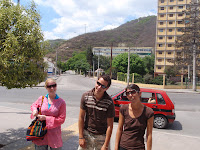 Ridiculously. We better hurry and get to Patagonia while our bank accounts still have a little bit of padding.Errands. The sun was hot.Dinner was homemade tomato soup with tortellini and non-melted tuna melts. Nate and I were definitively going out to party. I had the dancing itch. We found out that a Saturday night in Argentina usually starts around midnight or one. We played cards and pre-gamed until 12:30.About 9 blocks up from our hostel is where the nightlife began. The streets were blocked off and swarms of people populated the outdoor restaurants and bars. We grabbed an energy drink to keep our eyelids open as we people-watched. Everyone was out. Teenagers. Middle aged. And older folks. Everyone was dressed up.The music started thumping and the streets filled. Around 2am we skipped through the masses to find a cab to Salón VIP, THE place to be on a Saturday night. This multi-tiered dance club was outside of the main square and was just beginning to fill up when we arrived.Lights. Music. Black light. It was all there.The music, however, was not what we were used to and we had trouble dancing to it. Everyone just seemed to be standing in place and swaying slightly. After a few drinks, the music changed to our liking. We made our way to the dance floor.Hours flew as we moved and grooved. By the time the music changed back to the non-desirable genre, it was 4:30am and we were ready to go.The cabbie was chatty all the way back to the hostel.
 It’s hot. Very hot. The kind of mind-twirling, throat parching of hot. We’re in the touristy desert oasis of San Pedro de Atacama. Northern Chile. We made it!How did we get here? It began with an early morning Monday October 27 Cruz del Sur bus from Arequipa to Tacna. Uneventful bus ride except that we had to disembark before the end of the movie. I hardly noticed the landscape change into sand dunes. In the Tacna terminal, we were surrounded by pushy taxi drivers figuring that they could trade us a ride to Arica for 15 soles. Think again. We banded together with an Irish couple and set out in search of unbiased transit information. Good luck!
 We hopped into an honest cab for the train station. Closed. A disappointing lunch in the center of town til the ticket sale frenzy began. I say frenzy, but it was quite underwhelming. The excitement began when we got the Peruvian exit stamps and took our seats aboard the hunk of metal on wheels they called a train. The sunset hour-and-a-half journey was a gabfest between us and the Irish couple. We exchanged stories (their Peruvian nightmare sounded a lot like our Ecuadorian trip… a whole lotta terrible) and antidotes. By the time we arrived in Chile, we had crossed two hours worth of time zones. We were peso-less and I was thoroughly confused by the rapidfire Chilean accent. We found an atm and a cab to our hostel. A friendly, eccentric, proudly socialist, French man opened the door and offered us two rooms. Dinner was cheap and of mercado origin. Tuesday October 28. We woke up to CNN (in English!) with our all-we-could-eat bread breakfast. News about the US election dominated the headlines. We’re all getting giddy for the 4th. Hustled to the bus terminal to buy our overnight bus tickets to San Pedro de Atacama. Whew. The rest of the day we did errands.

Nate was WAY overdue for a haircut.

Tada! The haircutter was.. um… very friendly.  Chile. Are we really in South America? People in trendy outfits and highlighted hair sipping espresso beverages in outdoor cafes. After an overpriced, very sweet lunch and JENGA!, we checked out of the hostel and headed to the beach.
 Nate, Padraig and I shivered in the chilly Pacific while Caroline lounged in the sun. We must have spent hours on the beach. No amount of sunscreen could have saved our skins. Ice cream and junglegyms were in order when we realized that we were roasting. Dinner was delicious pizza. Nate had a 4-person pie to himself.
 The four of us narrowly avoided a knife-attack and scurried to the bus station. The 12 hour bus ride was the best I’ve ever had. Except for the 4am security bagsearching check point, we slept relatively well until we arrived at 10am on Wednesday October 29 in San Pedro. One difference between Chile and Peru (and there are many!), the people trying to sell us stuff aren’t pushy. They’re respectful. When you say no, they smile apologetically and proceed to leave you alone. Amazing!We shouldered our packs and faced our sunglasses and set off into the sunbaked San Pedro. It was hot. Very hot. It was only 10am.
 We were all sunburnt. Caroline was the worst. She was bright redpink and limping. We finally found a cheap hostel and sighed out of our bags. We had all day as a designated RESTday. We oriented ourselves around this tourist town and poked our heads into a few grocery stores. Nate and I whipped up a not-too-fancy-but-definitely-filling lunch for the four of us. San Pedro is a dusty road kind of town. The clay buildings reflect the hot sun. Everything simmers from 1-5pm. The heat and the nightbus caught up with us and we cowered in our rooms resting until well after sunset. Nate and I, taking clues from a French couple, fashioned our own tomato sauce to go with fettuccine and garlic bread. Wish we had salt and pepper. And more garlic! Cooking for four people is cheaper than for two. And we were stuffed!Competitive cardplaying kept us up past our bedtime. Nate was unusually giggly. I think it was the chocolate.

We arrive in Arequipa at midnight on Wednesday October 22 after a bus ride full of drama. The terminal terrestre is a short cab ride to the Point Hostel. After dealing with hunger pangs and an apathetic staff, we catch a cab to the Plaza de Armas in search of food. Nothing is open. Nothing except a little pizza restaurant with a wood-burning stove and guitar-playing waiters. The pizza was good for our empty tummies. Sleep was good for our tired bodies. Thursday Octber 23. Took it easy.
 Decided relatively spur of the moment to climb Mount Chachani, a 6075m stratovolcano peak overlooking Arequipa. (See middle peak) It wasn't a task to be taken lightly. The highest I've ever been was Mount Ararat at 5200m and I remember that being quite tough. Nate's never done a climb like this. But we've had enough of bus-sitting and passive food-eating. We needed a proper push-yourself adventure. We also needed three people for the trek. Luckily, a minute later, Irish Mark walked into the room inquiring about the same trek. We made reservations for the next day.
 The rest of the day was devoted to necessary errands and gazing at the mountains rising over of Plaza de Armas. We got to be rather familiar with the Ariquipeño streets, markets, and vibe. Friday October 24
 The 4 x 4 came to pick us up at 8:30am. It took us scowering the city to find hiking boots that fit us and around 10:30am we were on our way out of town. We sped out of the Arequipa city limits and into the countryside. The tremendous peaks of Chachani and El Misti towered in front of us. It was hard to believe that we would be climbing in less than 24 hours!
 After a tremendously rough ride, the car dropped us off at 5200 meters. We shouldered our packs and walked by the green alien moss-covered rocks to the base camp at 5400 meters. I could definitely feel the altitude. Whew. Tents were set up quickly and we rested with tallarines for the rest of the afternoon.
 The view was pretty spectacular from the base camp. The air turned chilly and then bitter as the sun set. Soup warmed our tummies. We crawled into our layers and packed our daypacks for the next morning. But sleep doesn't come. It's cold. And uncomfortable. My sleeping bag's zipper doesn't work. Mice pine at our tent flaps. I work myself up about how the vacuum that the antibiotics left in me plus the extreme conditions I was subjecting my body to would leave me uncontrollably ill. Saturday October 252am. Roy, our trekking guide extraordinaire, gives us the buenos dias wakeup call. Mate de coca and
 bread with jam, breakfast of mountain trekker champions. The night is dark and cold. Even with every conceivable layer, my toes and fingers are numb. We set off with our headlamps and gear. We start heading up, gaining altitude with every step, weaving in and around boulders. I bet Nate was secretly (or not so secretly) yearning to climb them. Meanwhile, I was working on my breathing. Breathe, step, step, breathe, step, step, swig of coca tea, breathe, rinse, repeat.
 Phase II began when the ground to our left disappeared. That meant it was pole time, so I whipped out my ski-like poles of radically different lengths. One positioned on the steep incline to the right, one as a third leg on the narrow path. Without proper light, I couldn’t gauge how far the drop was. I just took a deep breath and tried not to think about it. It wasn’t particularly difficult, I just had to concentrate on where I placed my steps on the soft volcanic sand and loose rocks. My breathing had a chance to stabilize itself.

Next came the ice. Continuing traversing, we sidestepped the conical icy stalagmites. No slipping allowed.  Slowly the twinkling lights of Arequipa became visible thousands of meters below us. Perfect timing too because we were due for a descanso. We sat on rocks with our coca tea watching the sky soften into morning colors. It was 4:30am.
 Roy points up. We have to summit El Angel and Fatima before we can begin with Chachani. Three volcanoes for the price of one? Fantastic. Across another icy maze and up the slippery dusty path. Nate and Roy flew. Mark and I held our own steady pace. Breaks usually included someone flinging themselves into a sprawl and chocolate munchies.

Passed 5600 meters sobre el nivel del mar. Passed 5800 meters snm. And climbing!The sun rose and exposed the breathtaking scenery. Mountain peaks near and far towered over the misty ground. Wispy clouds snaked in and out of view. It was so unreally stunning.  Being able to switch off our headlamps was humbling because it showed us the magnitude of what we were doing. It made the task at hand (putting one foot in front of the other) that much more daunting. Just keep breathing.
 ¿Dónde está el oxígeno? Breathing was getting quite hard. Mark was talking about a headache. Our breaks became more and more frequent. Whew. Nate and Roy are up ahead. I can hardly make it ten steps without a break to lean on my poles.
 Will I make it? I have to; I'm so close. But it's tough. There's hardly any air. And my body is so fatigued. Do people really do this for fun?!Oh stop it, Alisa. You know you'll make it. And YOU are doing this for fun. Just take your time, head down and step, breath, step, breath, step...Mark says he feels like he's going to throw up. My limbs feel so tired. But but but. I make it! And collapse at the top.

We spend some time at the summit, regaining our composure. The view is ridiculous.
Going down is a lot easier than going up. We practically runslideski down the soft sand. I try to keep up with the guide, but he scoots on ahead. We take well-needed long breaks enjoying the view and and act of rehydrating.It takes us about 3 hours to return to base camp. That's about 2 hours less than the ascent. All-in-all, I think we held our own against the volcanic peak. And we couldn't have asked for nicer weather and better company!
Completely exhausted, we all plopped down for a nap. The 4 x 4 picked us up around 1pm and we headed back into town. We arrived back to our cushy hostel completely exhausted around 3:15pm. What a tremendous day!
Sunday, October 19, 2008Finally the day arrived! The day when we would finally leave Cusco, that is. Whew.  We said goodbye to the touristy colonial streets and our cushy backpacker party hostel and jumped a cab to the terminal. Cusco had been our base for exploring and it felt weird, but refreshing, to leave. Our bus to Puno was with a reputable company, but the bus itself was tired, dirty and worn down. The door was tied on by a string. The windows were cracked or broken. The seats were dirty grey. There was a funny musty smell. It was all mighty grimy. It’s only 6 hours. It’s only 6 hours. It’s only 6 hours. Or so we thought. Things don’t tend follow strict time schedules in Peru. When we finally pulled out of the terminal, we cruised down the road out of Cusco. Finally getting out of Cusco! After so long! And…WHAM!
 We slowed to the side of the road to inspect the damage. A tire on the left side of the bus was blown to smithereens! In fact we left half of it down the road and the bare rim had cut into the road. My only thought was: Oh my goddess, we’ll never get out of Cusco. But we did, eventually. After a few stops to facilitate the movement of people to towns en route, we pulled into a darkened Puno. Courtesy of LP, we found a nice hostel pretty close to the happening part of town. It was getting late, so our dinner options were limited. We had a pretty disappointing meal before retiring to bed. Monday, October 20, 2008After attempting (and failing) to get up at 6am for the Lake Titicaca island departure, we gave ourselves an orientation and preparation day. Plus Nate’s digestive tract was doing the unhappies.
 Errands. Errands. Errands. Laundry. Pineapple for host family. The always dependable iPeru office. Food food. Tuesday, October 21, 20085:45am. Out the door by 6:50am. Mototaxi to the muelle.
 We try to avoid the hassling vendors, but they keep up with our quick pace. We buy our boat tickets to the islands. Here’s the itinerary:Puno-> Uros (the floating islands) -> Amantaní -> Taquile -> PunoReady? Go!8:20am departure from Puno to Uros (the floating islands), travel time 30min
 We share the boat with colorful, friendly, smiling, Quechua-chatting Indigenous folks. Our common language is Spanish. They patiently wait for us to do our tourist business on the floating islands.
 The floating islands were started by the Uros people as a way to isolate themselves from the more aggressive tribes of those times. The islands themselves are made entirely from the roots and reeds of the buoyant totoras, hence floating islands. Pretty much everything in their daily lives is made from the reeds: houses, boats, crafts, food! We pull into the community of 50 islands and step down from the boat. Squish. Squish!


The “ground” is spongy and our shoes sink into the reeds as we walk. A man sits us down for a quick Uros 101 lesson. Did you know that Titicaca means “grey puma”? Afterwards, we climb a mirador for a view and buy some crafts. And off we go!10am departure from Uros to Amantaní, travel time 3 hoursIt’s a long boat journey. We station ourselves at the front of the boat until the wind and the sun drive us inside. Three hours is a long time for a boat ride. I try to sleep. My stomach starts doing the unpleasantness… oh no. NOT AGAIN. Stay the afternoon and night on Amantaní with a family Sitting on Amantaní’s dock are a few men spinning wool. Our boat pulled up and we stepped uneasily onto shore. We dodged looks from locals and followed the boat driver up dirt paths leading to clay houses. The boat driver’s wife, Elisabeth, met us part way and led us to the house.
 Our room was on the second floor and contained two creeky beds, a table, a handful of chairs and two windows that sported awesome views over the lake. There was no electricity in the whole house.
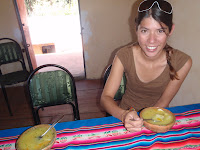 Lunch was prepared over burning leaves and consisted of soup, half an omelet, and a host of boiled lumpy roots. The roots still sported dirt, but were cooked so we ate them without fear. The best part of the meal was the mate de muña, supposed to help stomach problems and digestion. Perfect!
 After lunch we decided to go for a walk. The boat driver and his wife drew us a map in the dirt of how to reach Pachi Tata and Pachi Mama, the shrines on the highest peaks of the island of the Earth Father and Mother. On our walk we passed children recently out from school, exchanged buenas tardes with countless locals, meEEeehed back at the sheep, and almost got lost. The altitude is very apparent here. We slowly make our way up the stone path. The sun is fierce and forces us to tap deeper and deeper into our water bottle.
 As we climb, the view opens up. Lago Titicaca extends its majestic blue waves out in all directions. We can see Taquile and the Peruvian coast on one side and just barely make out the Bolivian side. The view looks unreal. We take a bunch of pictures. The panorama ones are hit or miss. I don’t know what I was expecting for the shrines themselves, but it wasn’t crumbling rock structures with padlocks leading into them. Oh well, the view was well worth it! First up to one peak, then the other. Whew. There’s hardly any air up here!
 Amantaní is mainly an agricultural island. There are many tiered terraces for crops, a technique used by the Incas. It was really awesome to see how self-contained the island was. All the electricity used (and there were some houses that had it) was produced on the island. True some food is imported from mainland, but a lot of it is grown right there. There were no cars or any motorized vehicles for that matter. The mode of transportation of choice was feet. The overall vibe was tranquil and relaxed. There was no rushing to get anywhere. Everything and everyone happened at their own pace. On the way down, we descended with the sun. We passed the afternoon wave of tourists and watched the locals set up portable markets in hopes of coaxing a sol or two from the jiggling pockets. We preferred to watch a soccer game.
 We descended on the beach for sunset. The sky changed to a marvelous shade of purple, and the water reflection responded. It was nearly dark by the time we made it home.
 Amelia, Anderson, and Michael were sitting outside our room on the stairs when we got back. Amelia, the oldest, couldn’t have been older than 10. We showed them our headlamp, which was an entertainment highlight along with our camera. As Amelia sat peeling totoras, Nate opened the floodgates with a question. Do you like music?Floodgates? Oh yes. From there, the situation spiraled out of control and into hours of singing and dancing. We performed none of it, but rather watched, laughed and applauded songs in both Spanish and Quechua. Stomping ensued. Just when we thought we could take no more, the children tired before us. Dinner came and was very welcomed. We slept very well bundled in our jackets, pants, and wool blankets. Wednesday, October 22, 2008
 We were up without an alarm before 6am. Pancake breakfast and last pictures before we said goodbye to our family, and the outhouse. We were told that we were going to join a tour group for the day. Oh great. Just what we wanted, to be in a pack of tourists listening to a guide. This is precisely why we did NOT join a tour to begin with.8am departure from Amantaní to Taquile, travel time 1 hour
 The ride Taquile was uneventful, just took a while. Three hours on Taquile
 Started with an ascent to the main plaza. We passed all the tourists in the group, oxen that almost speared me, amazing views, and little shacks. I wish I could have enjoyed it, but my stomach was not doing well. I was very happy when we arrived at the plaza. Tourism has sculpted Taquile’s Plaza de Armas. There are restaurants, a large artisans market, and little children running around selling bracelets. I self-diagnosed myself with a bacterial infection and promptly began my antibiotic regimen. More meds. Yum yum yum.

 We had to have lunch with the group, which ended up being fun. Before the food came, we heard a spiel about the history and culture of the Taquile indigenous people. It was interesting, but way too long. Quinoa soup was phenomenal. The fish was good too. We sat between two French dudes who didn’t speak Spanish and three Peruvian women who didn’t speak any English or French. Nate and I were the translators. It was kind of fabulous. I want to learn more languages.
 We crossed the island and began our descent down to the other dock. While we waited for the rest of the group, Nate found a structure that he absolutely had to climb. 12:30pm departure from Taquile to Puno, travel time 3 hours
 Sleep was awesome. There’s nothing that makes a boat ride go faster like sleep. But after a while, Nate got bored of me sleeping. We spent the rest of the ride poking each other and giggling at nonsensical elements. Arrival in Puno…… meant preparations for our immediate departure to Arequipa. We said goodbye to our groupmates and scuttled into town. Plaza de Armas led us to Parque Pinos. Laundry pickup, snacks, packing, and Terminal! We picked up a pair of bus tickets to Arequipa on a pretty nice bus. We even got the top front seats on the double decker bus. We had an awesome view. What a great ride it’s gonna be, we thought. But, no, things in Peru are never that predictable.


